

Opens in a new tab

Love your neighbour

Love your neighbour

Love your neighbour

Three quotes from the teaching on 2026-02-04

Loving your neighbour is not about what you get out of it. It is not about you!

You are not called to love your neighbour in order to get something in return, but because your heavenly Father desires it.

When you make a sacrifice, and it hurts, that is when you are allowed to see God’s blessing.

Short description of the teaching

The teaching focuses on what it actually means to love one’s neighbour as oneself, and why this is absolutely central to the Kingdom of God. It shows how love for one’s neighbour is not based on feelings, but on a self-sacrificing love that chooses to act for the sake of the other, even when it comes at a cost. We are encouraged to see our neighbours not only as those in our own ‘group’, but as the people God places in our path in everyday life. It becomes clear that helping the weak, vulnerable and overlooked is taken very seriously by God, as if it were done to Jesus himself. We are called to pray to be shown who our neighbour is, and to live with openness, generosity and obedience, even when there is no thanks or reward.

Watch the teaching here...

Watch the teaching directly on YouTube here: https://youtu.be/ZT0UFpFOuA0

We depend on you!!

You can support “Stenslyngen” (the stone sling) and LytTilJesus.dk through “Rescue Team”, which has a fundraising permit:

Click here and support our work

This teaching is categorized within the following topics:
– click on them to see more relevant teaching

Did you know you can listen to the newest teaching as a podcast on e.g. Spotify and Apple Music?

Click here to listen: https://li.sten.to/lyttiljesus

  • Scriptures from the teaching on 'Love your neighbour'

Mark 12:28-34
Leviticus 19:18
Matthew 5:43-48
Matthew 25:31-46

NB! The summary below is an automatically AI-generated text from the teaching itself. Errors may occur to a greater or lesser degree!!
Watch the whole teaching on YouTube instead!!

  • Summary of the teaching on 'Love your neighbour'

Loving one’s neighbour is not a minor side note in the Bible, but lies at the very heart of what it means to live with God. The starting point is Jesus’ words that the greatest commandment is to love the Lord with all one’s heart, all one’s soul, all one’s mind and all one’s strength, and that the second greatest is: “You shall love your neighbour as yourself.” This is not a nice quote to hang on the wall, but something that is placed on a par with love for God itself. Andreas Slot-Henriksen explains here why, in God’s eyes, love for one’s neighbour is more important than all the outward religious trappings, and why it is not about feelings, but about will, choice and concrete actions.

It is first pointed out that a scribe in the Gospel of Mark actually sums up God’s heart himself when he says that loving God and loving one’s neighbour is worth more than all burnt offerings and sacrifices. This is powerful, because the entire system at that time was built on sacrifices, law and outward actions. Yet here it is made clear that love for God and one’s neighbour takes precedence over all that. Jesus confirms this and says to him: “You are not far from the kingdom of God.” Thus it becomes clear that love for one’s neighbour is not merely an added bonus, but one of the very pillars of God’s kingdom.

The teaching goes on to explain that the love spoken of here is not a fleeting emotional mood, but the love that the Bible describes as a self-sacrificing love, driven by a decision. It is not primarily about what one feels for a person, but what one chooses to do for that person. The same love that applies to our relationship with God also applies to our relationship with our neighbour. In other words: the way you choose to love God—with intention, obedience and action—is also the way you must decide to love your neighbour. It is demanding, but that is the standard Jesus sets.

Some common misunderstandings are also addressed. Some people think that because they do not care much for themselves, the commandment to love one’s neighbour as oneself does not apply to them very much. Others end up in the opposite camp and believe they must first learn to love themselves immensely, pamper themselves and focus on themselves before they can love others. Both approaches are rejected. Instead, it is pointed out that the commandment is based on a premise: you are created in God’s image, and when you begin to believe what God says about you, a healthy love for yourself will grow – not as selfishness, but as a grateful rest in being loved.

It is also mentioned that today’s world has forced a host of distorted ideals upon people, so that many struggle with self-loathing, body shaming and shame. But God did not create us to hate ourselves. The idea that no one has ever hated their own flesh is used to show that God has, from the very beginning, placed a fundamental value within humanity. Instead of looking to the images in the media, we are called to look to what God says. When identity and self-image are rooted in God’s love, it becomes possible to love oneself in a healthy way and, from there, to love others without needing to use them to fill one’s own emptiness.

A central question in the teaching is: Who is actually my neighbour? It is explained that in the Old Testament, where the commandment first appears, the word ‘neighbour’ in Hebrew is linked to the group to which one belonged – one’s own people, one’s own tribe, one’s own local community. In other words, one was to love those who were “within the circle”. But in the New Testament, Jesus takes it a step further. In Greek, “neighbour” is more closely associated with the person one encounters in the situation God places one in – regardless of background, group or affiliation. This breaks down the narrow framework, and love for one’s neighbour becomes something that extends beyond one’s own ranks.

Here, the parable of the Good Samaritan is highlighted as a powerful illustration of what love for one’s neighbour looks like in practice. A man lies battered by the roadside, and those who ought to help – the religious and those from ‘the right group’ – walk past. Instead, it ends with a Samaritan, whom the Jews looked down upon, stopping to dress his wounds, paying for his accommodation and care, and even promising to cover any additional expenses. Here, love for one’s neighbour is shown to be something that costs time, effort and money. It is not just a pat on the back and a “get well soon”, but concrete help, care and generosity.

It is emphasised that such love does not come cheap. The Good Samaritan sacrifices his comfort, his plans, his own finances and his time. The point is that charity without sacrifice quickly ends up as fine words without substance. A distinction is also made between pure humanism and Christian charity. Humanism may focus on helping people, but without God at the centre. The Christian call to charity encompasses both practical help and a desire to lead people to Jesus. Therefore, it is not just about meeting needs, but also about being open about the fact that love comes from God.

The teaching moves on to what perhaps hurts the most: loving even when you get nothing in return. It is realistically stated that you will experience disappointment, ingratitude and coldness. You may have invited people into your home, helped them, given your time and energy, and never received a thank you or an invitation in return. But love for one’s neighbour is not about what you get in return, but about reflecting the love you yourself have received from God. We are encouraged to invest in people, even if it hurts, and even if it sometimes feels as though you are ‘losing out’ in the short term.

A key part of the teaching involves reading from Matthew chapter 25 about the sheep and the goats, where Jesus speaks of having given food to the hungry, clothing to the naked, and visited the sick and those in prison. Here it becomes clear that Jesus takes it personally what one does or does not do for the little ones, the weak and the overlooked. It is not merely a matter of ‘good manners’, but something that will be weighed on the Last Day. When one helps the least of these, it is as though one is helping Jesus himself, and when one ignores the least of these, it is as though one is turning away from Jesus. It is hard reading, but it shows how seriously God takes love for one’s neighbour.

There is also frank talk about how the devil can send people your way to drain, control and destroy you, and that it is therefore important to have spiritual discernment. You must not throw yourself uncritically into every relationship, as this will end up pulling you away from God and into chaos. Therefore, we are encouraged to pray for the ability to discern spirits, so that we may distinguish between those sent by God and those sent to destroy. At the same time, it is said that even when we err in good faith, God sees the heart and rejoices in the willingness to love. It is not flawlessness He is looking for, but people who are willing to be shaped and learn along the way.

The teaching culminates in a practical call to action: Ask God to show you who your neighbour is. It could be a neighbour, a colleague, a friend, a refugee, a homeless person, a family at McDonald’s, a person on the street, or an old acquaintance from the past. The most important thing is not where you find the person, but that you are willing to let God point the way. Emphasis is placed on the fact that love for one’s neighbour will cost time, convenience and often money – but that God also blesses those who respond to His call without doing so to ‘profit from it’. Finally, there is an encouragement to take the commandment to love your neighbour as yourself home with you and allow it to challenge, shape and guide you, so that love for one’s neighbour becomes not just a word, but a way of life.

“Quote from the teaching:” “Love your neighbour as yourself.”

Relevant keywords: love your neighbour – love for one’s neighbour – Good Samaritan – love yourself – agape love – practical love – willingness to sacrifice – helping others – God’s love – discipleship – Judgement Day – mercy – generosity – Christian lifestyle – love your enemies


ReadTranscription

Click here to read the full transcription of ‘Love your neighbour’.

Read the full content of the teaching 'Love your neighbour'

Please note that there may be deviations and errors, as the text below has been transcribed and adjusted automatically.

Something that’s really, really important is to love your neighbor. It’s actually incredibly important. And no, it doesn’t just say love your neighbor. It says… And I just want to start with this because Jesus, he says it. We have to take it from there.

The Gospel of Mark, chapter 12, verses 28 to 34. One of the scribes, who had heard them debating and noticed that Jesus answered them well, came up and asked him, “Which commandment is the first of all?” Jesus answered, “The first commandment is: Hear, O Israel, the Lord our God is one. You shall love the Lord your God with all your heart, with all your soul, with all your mind, and with all your strength. The second is this: You shall love your neighbor as yourself. There is no other commandment greater than these.” Then the scribe said to him, “Well said, teacher. You are right in saying that God is one and there is no other but him. To love him with all your heart, with all your understanding, and with all your strength, and to love your neighbor as yourself is more important than all burnt offerings and sacrifices.” When Jesus saw that he answered wisely, he said to him, “You are not far from the kingdom of God.” And after that, no one dared to ask him any more questions.

So we know here that loving your neighbor can be equated with the commandment to love the Lord our God with all our heart, all our soul, all our strength, everything we are, everything we have. We must love our neighbor. So this isn’t a small commandment coming here. It’s not just, “Oh, remember to love your neighbor.”

The response from this Pharisee afterward is actually incredibly interesting, as he says. And loving your neighbor as yourself is more valuable than all burnt offerings and sacrifices. And see, we need to look at this in the context of the old covenant. Everything happening here is under the old covenant. That means all of Judaism or the Jews are under the Mosaic Law at this time.

And that meant if you had done anything wrong in God’s eyes, the way you were justified was by bringing burnt offerings or sacrifices, by presenting them at God’s altar, to gain atonement in that way. Now Jesus comes in from the side, whoosh, and adds, “Hey, this is more important.” It’s not Jesus saying it’s more important, but Jesus confirms it. Wow, you’re wise. You’re not far from the kingdom of God.

So we know that loving your neighbor is up here in God’s ranking, in priority, in his order. Love your neighbor. And it’s quite remarkable that such a seemingly small commandment, which we actually focus so little on, because there’s not much focus on it, is equated with loving the Lord our God.

When we look at what it means to love in this way, it’s the agape love we’ve talked about several times. Agape love is this love that is self-sacrificing. It’s a love driven by a decision of the will. It’s a love that is precisely not directed or governed by a feeling but by a decision.

So it’s the self-sacrificing love you choose because you decide to do it as a decision. In the same way, you should love the Lord your God, and in the same way, you should love your neighbor. It’s exactly the same word used for both things. And that’s quite intense.

And we’ll get into it a bit later. Specifically, when Jesus also says we should love our enemies. The word he uses here is exactly the same. That is, the self-sacrificing love.

Wow. Many, when they read this, might think, what does it really mean to love your neighbor? And the interesting thing is, for many, there’s a misunderstanding because it’s not always the case that you might think, well, maybe I don’t love myself that much. If I don’t love myself that much, then I don’t really need to love my neighbor that much because I should love my neighbor as myself. And if that’s the requirement, then I can do that because I actually don’t think that highly of myself.

Another way to turn it around is that many people think, yeah, maybe I don’t love myself enough, so I really need to pamper myself and start loving myself a lot. And I can also see that I’m actually not self-focused enough, and I actually need to start looking at myself a bit more, and wash my navel, and really cover myself in lotion, and stand in front of the mirror and really, uh. And that’s one way to take it. As long as I don’t get to have lotion, then it’s fine.

But then there are those who think, well, love your neighbor. Do you realize how many times I’ve been let down in my life by loving someone because I’ve never experienced getting anything back? Do you realize how many people I’ve invited to dinner parties and tea parties and coffee gatherings and walks, and I’ve never been invited back a single time by them? Never. No thanks. I don’t need to love my neighbor because I get absolutely nothing out of it.

And that’s totally misunderstood, all three forms of loving your neighbor, because it’s not about you. First of all, loving yourself, having a love for yourself, is actually a requirement. It’s taken as a given for this commandment because you are created in God’s image. And when you come to faith and start believing who God is, and believe in what God says, believe in what he says about you, who you are, what life you have in him, all these amazing things, start immersing yourself in that, then naturally, there should be a love growing, not this selfish, wow, I’m just great, and everyone else can just go home.

It’s not that at all, but rather this, where you just rest in it. Wow, I’m just loved by my heavenly Father. I’m just his favorite, and I simply, oh, thank you, man. You’re just too good, Jesus. Where you can really feel this gratitude. Really feel this, I know, I know that my Father loves me. I know that I am created in his image.

And it’s a prerequisite, it also says in Ephesians: “No one ever hated their own flesh.” And yes, many have, but they haven’t done it from what God has placed in them from the beginning. But they’ve done it from what the world has imposed on them. And I would say especially today, back then, they didn’t have TV to ruin people. And if they had images, it was most likely a woodcarver making them. And it was very, very difficult to get the details right. I think it was incredibly heavy to buy such a picture magazine made of woodcarving. So I don’t really think it was there.

So there weren’t the ideals we have today. You were who you were in a completely different way. We don’t do that today. So the world has defined a lot of junk, but fundamentally, it’s placed in us so deeply from the beginning. No one ever hated their own flesh.

Just imagine if you had gone through your entire life never having anything against you, and you could just say, “Wow, God, thank you. Thank you, Father.” It’s also important to understand that this doesn’t necessarily mean you should love yourself more than others. But you should love your neighbor as yourself.

And to love your neighbor as yourself, we also need to figure out what a neighbor really is. What is our neighbor? What’s interesting is, I want to read from Leviticus because that’s where we hear about it. It’s in the commandments, the Ten Commandments. In Leviticus, chapter 19, verse 18, it says, “Do not seek revenge or bear a grudge against anyone among your people, but love your neighbor as yourself. I am the Lord.” Love your neighbor as yourself, I am the Lord.

And what’s interesting is, we know the Old Testament was written in Hebrew. And if we take the word neighbor in Hebrew, it actually has a completely different meaning than in Greek. And it’s very interesting because in Hebrew, when it talks about a neighbor, it’s within your grouping. That means it’s within your people. It’s within your small area. That’s your neighbor.

So, if you’re from the tribe of Judah, then you love those who are in the tribe of Judah or in your family or wherever it is. So that’s actually what it means to love your neighbor. You should love the grouping you are in. Those are the ones you should take care of. Those are the ones you should protect. And that’s also what we see, that many Jews have embraced a lot, precisely other peoples, but their own people, they should love, and everyone else, no thanks.

If we look at the Gospel of Mark, what did Jesus actually say here? When he mentions the word neighbor, it actually goes a step further. When we look at the Greek word for neighbor, it’s no longer a grouping, but we move into a situation. That means we have a situation now. That means, in the situation where God has placed you, you should love the person you meet there, where you are.

And that’s suddenly something completely different because it means that this sense of belonging, which was under the old covenant, under that word, is gone. Now it’s, where has God placed you? So you should love the one God has placed you with, right there. And I really think it’s amazing how the words shift around when you take the different languages. And Jesus clearly changes it too.

Because what we see then is, if we read the Gospel of Luke, chapter 10, and I won’t do that, but I think you should when you get home. There we have the story of the Good Samaritan. And the Good Samaritan is really, really good in many ways because it tells precisely about this idea of what the Jews thought about loving neighbors with groupings. Because what happens is, there’s this poor beaten man lying by the roadside. And then this Levite comes along, someone from the tribe of Levi. He’s a Jew. He should love his neighbor, understood in his universe in that way, those who are from the tribe of Levi, you love them.

So he sees this poor beaten man. He’s even a priest because that’s what the Levites happened to be. And he just walks by. He doesn’t do anything for him. He doesn’t help him. He does nothing. Nada, zilch. Completely cold. Then a Samaritan comes by.

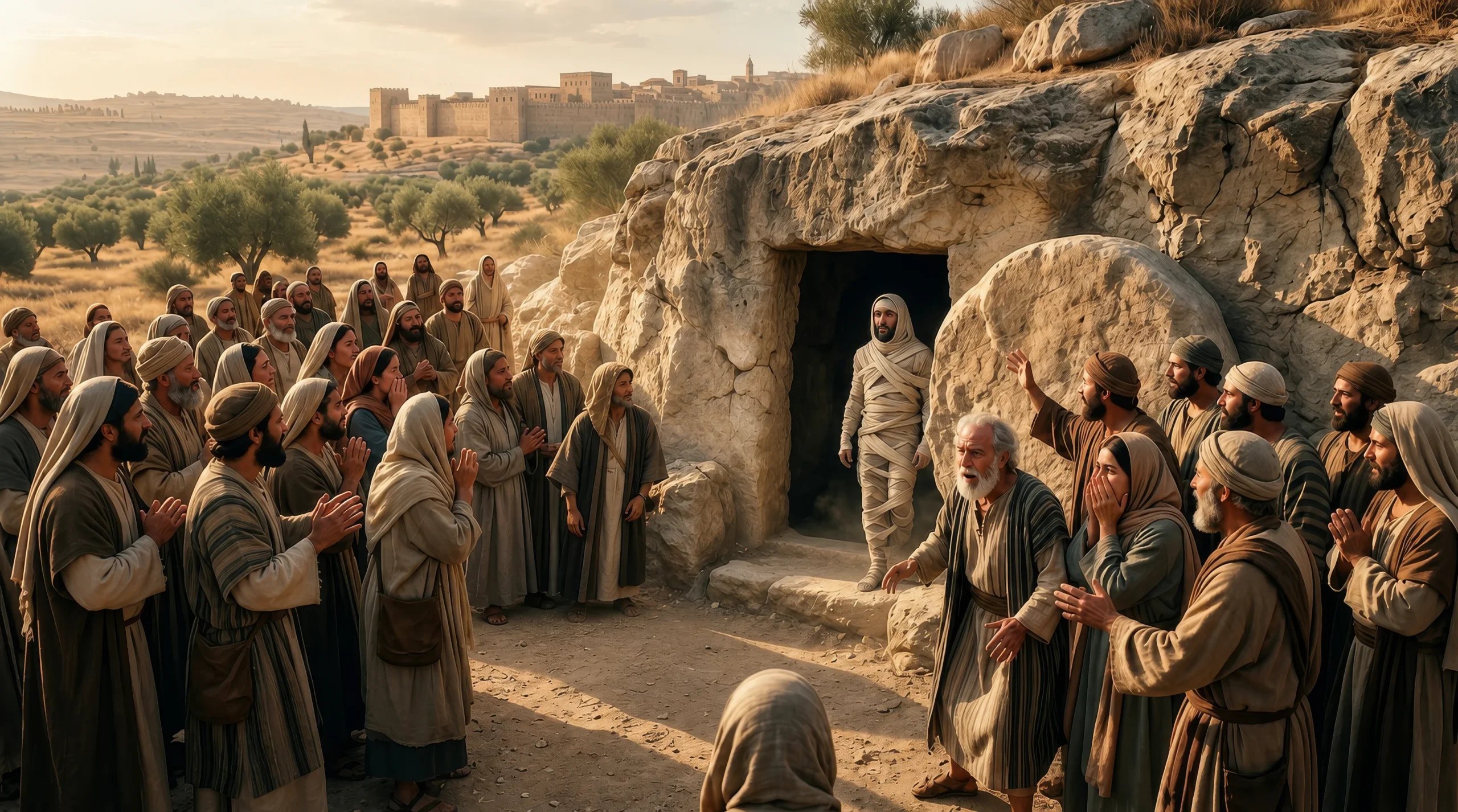
And a Samaritan, he’s a Gentile. He’s an ungodly man. But this ungodly man takes care of this beaten man, gets him into an inn, bandages him, pays his bills. And even says to the innkeeper, “Hey, if there are extra charges, I’ll pay them on my return trip.”

So that means, right here, we have a picture of who the neighbor is, from what Jesus talks about, from the New Testament. This is those you are placed around. At the same time, it’s a fantastic picture because here we have the sacrificial one. It hasn’t been cheap. The man has been deeply beaten.

He comes in and lies with the innkeeper. The innkeeper even has to take care of him. And he pays for overnight stays. It’s like you meet someone who’s beaten on your way. You put them in a hotel, pay 700-800 kr. per night plus food plus care, that a waitress comes every day and changes bandages. And if there are extra expenses, you don’t put any limit on it. It must not cost too much, but no, do what’s necessary, and if it costs extra, I’ll come back on my return and pay.

See, this is a sacrifice. This is love, agape love. The one who wills, the one who sacrifices something. And that’s actually what we’re called to. We’re not called to say, “Oh, have you hurt yourself? That’s really too bad. Come, I’ll help you up.” Well, have a good day. Bye. Bye.

No, we need to be there for people, and we’re so bad at this in the West, it’s incredible. It’s incredible. And if you get good at it, you’re called a humanist because many humanists are okay at this. But when we go out and do it, it’s not just with humanism in mind, because it’s not worth anything. Humanism is neighborly love without God.

But we come with the whole package. We come both to meet the person, but we also meet the person in God’s love. That means we have to tell about Jesus. We have to say, you know what, I’m doing this because Jesus has set me to love you. And I actually intend to do that.

Jesus has set me to love you, and he has placed me on your path because he wants to love you with a mutual love. He is so good, and he is so amazing. So this thing about deciding, I actually want more into this. I actually want to understand what it means to love my neighbor.

It requires starting with the decision. It actually requires investing time. It also requires investing money. It requires, for example, let’s say you meet someone who is homeless, something like that, do you dare to invest in them? Do you dare to invite them home? Do you dare to give them a bath? Do you dare to give them a meal? Do you dare to tell them about Jesus?

Or do you start to fear right away, oh no, you can’t, what if they attack. No, and so many things can happen. I grew up with it. I grew up with highwaymen coming to our door when I was a child. And we invited them in. We’ve had a lot of highwaymen staying, and many of them were completely drunk, but we also helped one out, and he got his life back.

And that’s exactly it, when we choose to invest in other people’s lives, you should know that you’ll probably be disappointed many, many times. People almost never give anything back. You’re really lucky if you get a thank you, because that’s the culture, that’s the world we live in.

But you’re not called to be loving to your neighbor so you can get something out of it. You’re called to be loving because your heavenly Father wants you to be. Because He loved you first. So you need to pass that love on to others. And it’s really hard. It can be really, really tough.

Also because it actually says in God’s word that in the last days, love will grow cold. Lawlessness will abound, and the love of many will grow cold. That’s in Matthew 24:12. And we see it, we see it a lot. We see how, if you read 2 Timothy 3:1-5, you’ll see how people become self-centered, money-loving, ungrateful. We see how these fleshly, devilish personalities emerge in people, even in believers, because it sneaks in, and because we never really talk about these things.

But this thing about truly investing, about really saying, well, I want this, I want to do this. Then you ask, well, how do you do it? What should I do? Well, try to decide, okay, I’m going to start investing in some people. It doesn’t have to be someone who’s fallen, who’s hurt. If it’s just a person who doesn’t know Jesus, then I believe they’re fallen enough, because it ends with them being lost if they haven’t found Jesus.

So I choose to say, okay God, I’m going to try, I’m really going to try with everything I am and everything I have. I want to take this upon myself. I want to try to love my neighbor for real. I want to try it out. See if I can do it. Won’t you please help me? Won’t you please put someone in my path that I can truly invest in?

Because if I’m to love my neighbor as myself, I’ve invested a lot in myself. I’ve invested in food and fuel for the car, and it costs a lot to live. Just think, if we were to start investing in other people’s lives in that way. Well, I don’t have the money. You also have to understand, well, God blesses you. Trust me. If you make the decision with God, He blesses you back many times over. Really many times.

But if you don’t do it because you’re afraid of losing some finances, then you’re at a point where… It’s not a sacrifice. It’s when we sacrifice. It’s when it hurts. That’s when we actually get to see God’s blessing in return. You just shouldn’t do it to be blessed. You should do it because you know it’s right. You should do it because you have a passion for it.

But again, find family members, find some neighbors, regular neighbors. Find a colleague. Find someone at the bus station. Find someone at a refugee center. Find someone wherever you’re called to go. Find a homeless person. Find someone at the library sitting with a book. Go into a music shop. Find the guy sitting there playing guitar. Whatever. Go where God leads you. Take a walk to McDonald’s. See if you can find a family there that actually looks like they don’t have much money. Go up and say, “Hey, what did you pay for this meal? Can I pay for it?” Invest. Sit down and talk with them. There’s just so much gold in it.

And once you’ve done that, the next really, really hard thing comes. It’s putting your own comfort aside. Well, not right now, because it’s raining, and I don’t have an umbrella. Or I’ll get dirty if I touch this person, because they’re really dirty.

It doesn’t matter at all. Put your own comfort aside and choose. And then expect resistance. Expect ingratitude. Expect coldness. Expect people to resist. They did it to Jesus too. So how much more would they do it to you when you come?

Just do yourself the favor of never becoming a humanist. But do it based on the word. Do it based on God’s word. Do it because you know it’s right. It’s just so important.

I will try to read the Gospel of Matthew chapter 25 verses 31 to 46. When the Son of Man comes in His glory, and all the angels with Him, then He will sit on His glorious throne, and all the nations will be gathered before Him, and He will separate them one from another, as a shepherd separates the sheep from the goats. He will put the sheep on His right and the goats on the left.

Then the King will say to those on His right, “Come, you who are blessed by my Father, inherit the kingdom prepared for you from the foundation of the world. For I was hungry, and you gave me something to eat. I was thirsty, and you gave me something to drink. I was a stranger, and you invited me in. I was naked, and you clothed me. I was sick, and you looked after me. I was in prison, and you came to visit me.”

Then the righteous will answer Him, “Lord, when did we see you hungry and feed you, or thirsty and give you something to drink? When did we see you a stranger and invite you in, or naked and clothe you? When did we see you sick or in prison and visit you?” And the King will reply, “Truly I tell you, whatever you did for one of the least of these brothers and sisters of mine, you did for me.”

Then He will say to those on His left, “Depart from me, you who are cursed, into the eternal fire prepared for the devil and his angels. For I was hungry, and you gave me nothing to eat. I was thirsty, and you gave me nothing to drink. I was a stranger, and you did not invite me in. I was naked, and you did not clothe me. I was sick and in prison, and you did not look after me.” They also will answer, “Lord, when did we see you hungry or thirsty or a stranger or naked or sick or in prison, and did not help you?” He will reply, “Truly I tell you, whatever you did not do for one of the least of these, you did not do for me.” Then they will go away to eternal punishment, but the righteous to eternal life.

This is actually tough reading. It’s really hard. But nonetheless, this is about what we do for our neighbor. Who is it that God places in our path? Do you brush them off and say, well, I have so much to do right now. I really don’t have time for you right now. I would really like to, but I just can’t handle it right now.

Then it’s no longer a sacrifice. Then it’s because you’re putting yourself first. And am I saying you should always lay down for everyone and never do anything for yourself? No, that’s not what I’m saying, because it says you should love yourself as your neighbor. And that means you also have the right to withdraw and recharge. You need to do that too. You should spend time alone, but you should also reach out.

So this combination, where you take care of yourself, where you’re built up by God, you let Him fill you up, you learn to walk with Him, but at the same time, you also learn to say: Okay, it’s not about me, God. Now you can send someone. And it can be in periods. Sometimes you might find someone comes along, and then a long time passes before the next one comes.

It can also be that two or three cancel each other out, and then there’s a long period where nothing happens. That’s fine. But what’s important is that when God puts you on a path where a sick, beaten man, figuratively speaking, is lying by the roadside, are you the one who picks him up, or are you like the Levite who just walks by? And that’s a tough question. It’s a super difficult question, but I just want to encourage you to pray and ask God to reveal to each of you, say, God, who is really my neighbor? Who is my neighbor? Won’t you show me some people I can care for? Won’t you show me some people I can take in, shepherd, and help raise up?

And yes, you will find that people don’t accept Jesus. We have the story of the ten lepers. They were healed. They got healing. They got a new life. Only one came back to say thank you. You shouldn’t expect people to come back and say thank you. You should do it because you know it’s right. You should do it because you know it pleases. You should do it because on judgment day, God will say to you: “Hey, what about the one who came to your door who didn’t have food? Why didn’t he get any? What about the one who didn’t have clothes? Why didn’t you give him any? What about the one in prison? Why didn’t you visit him?”

And I sometimes ask myself that question. If it were me being asked these questions, and I knew I hadn’t done it, I could never come up with an answer that would be satisfactory enough. Never. But you can come up with so many answers when you’re on earth, with silly excuses that, in the grand overarching perspective of God, are completely worthless.

So again, what God sends, because that’s what’s so important here. The devil can also send people your way to destroy you, to steal your time, to steal your attention, to completely mess with your head. And that’s where it’s so important that we ask God for the ability to discern, to discern spirits, to discern, is this someone you’ve sent, God?

I’ve tried to take care of people who definitely weren’t sent by God. I have. I’ll be the first to admit that. But the more we walk, the more we grow in it. The more we grow in it, the more we learn from our mistakes too. And when we can teach each other to stand up and say, I’ve failed, I’ve been a fool, then it’s not so bad for others to say, okay, I did it too. Sorry.

But when you ask God to shape you, when you ask God to smooth your edges, wow. And even if you end up taking care of someone who definitely wasn’t sent by God, God still sees it and delights in your heart. So love your neighbor as yourself. Take that home. Reflect on it. Ask God, who is my neighbor that I should love? Is it a coworker? Is it a friend? Is it a buddy? Is it an old schoolmate? Something like that. Who is it that I can be a light for? Who is it that I can invest in?

And it might be that there’s no one right now. Fine. But just be open, because God will send if you’re willing. It requires a sacrifice. Yes.

Close