Opens in a new tab

Character and Attitude

Character and Attitude

In this category, you will find teaching about character, attitudes, and the mindset that shapes a life with Jesus. It brings together teaching on character formation, faithfulness, courage, obedience, wisdom, and love in practice. The goal is to shape the heart, strengthen maturity, and help you become more and more like Christ every day.
Read the full content of the teaching 'Do you worship God, or do you worship what He can give you?'

Please note that there may be deviations and errors, as the text below has been transcribed and adjusted automatically.

Because if we’re proud to praise God, why do we fear as humans? God silences our opponents when we praise. It’s a weapon. Are you hungry when you come to God? Or have you filled yourself with all sorts of other things?

A life of worship. It’s just as much about the choices you don’t make. Because if God asks you to do something and you don’t do it, then it’s not a life of worship. But what I’m going to talk about today is a life of worship. A bit of praise, a bit of thanksgiving, a bit of worship, a good mix of everything.

But first, I just want to break down these definitions a bit. What is praise? What is worship? What is thanksgiving really? We can say that praise is about singing or expressing to God. Praise to God. Worship, which I’ll really dive into today, is more about bowing down, honoring Him, and submitting to Him. It’s both in words, physically too, but it’s also an action, actually a lifestyle of worship.

And then we have thanksgiving, which is what we’ve just done, coming before Him with thanks and thanking God for what He’s done. And maybe it’s a bit cliché to start with, but I think it’s important to clarify what the purpose of worship is. Who should be worshiped? Why? And what do we actually worship for?

I believe, well, the Bible is pretty clear that it’s God alone. He is the one to be worshiped. For instance, when Satan comes to tempt Jesus, Jesus responds. It’s Luke 4:8 if you want to write it down. It says, Jesus answered, “It is written: Worship the Lord your God and serve Him only.” It’s God alone.

And we see it many times in the Psalms, for example, 95:6, where it says, “Come, let us bow down and worship our God. Let us kneel before the Lord, our Maker.” And there’s this other aspect that God actually seeks worshipers. He seeks those who can worship Him because it brings God glory.

We see this in the Gospel of John, chapter 4, verses 23 to 24. It says, “Yet a time is coming and has now come when the true worshipers will worship the Father in spirit and truth, for they are the kind of worshipers the Father seeks. God is spirit, and His worshipers must worship in spirit and truth.”

And first and foremost, I think it’s a question that often arises: What does it mean to worship in spirit and truth? But God has given us the spirit. God has given us the Holy Spirit. So it’s also about worshiping or seeking God under the guidance of the spirit. For example, speaking in tongues.

And the Bible is the truth. So if you begin to worship God for what He says He is, then you are worshiping God in truth. And God desires those who seek Him with a sincere heart. Those who truly want to seek Him and not just the gifts He gives. Those who want to seek Him no matter the cost. Those who want to seek Him without compromise. That’s what honors God. And that’s what He seeks.

We should worship God because He is holy. Because He is king. Because He is creator. Because He is savior. And I could have said many other words there. But God is good.

But what I want to talk about today, I’ll focus on three parts. Gratitude and praise, what is called praise in English, and then worship.

What you would call worship in English. Yes. And maybe, of course, it’s a bit exaggerated because all these three things can, well, they kind of blend together. But I’ll try to separate them a bit and explain what the Bible says about each thing. Especially worship, because that’s going to be my focus today.

But for example, gratitude. Gratitude acknowledges God’s greatness. Let me say that again. We acknowledge God’s greatness. And I find it quite interesting because if we go to Psalm 100:4, it says we should enter His gates with thanksgiving and His courts with praise; give thanks to Him and praise His name. It says gates, which is the first thing we enter to come into His presence. That means entering with thanks, entering with joy.

And I think that’s kind of nice because the ticket is thanksgiving. The ticket to the courtyard is praise. So entering His presence with thanks. We also see this in Colossians chapter 3, verses 16 to 17. I know there are many Bible verses, but just hang in there, write them down or something. It says, “Let the message of Christ dwell among you richly as you teach and admonish one another with all wisdom through psalms, hymns, and songs from the Spirit, singing to God with gratitude in your hearts. And whatever you do, whether in word or deed, do it all in the name of the Lord Jesus, giving thanks to God the Father through Him.”

Let me just read verse 17 again. “And whatever you do, whether in word or deed, do it all in the name of the Lord Jesus, giving thanks to God the Father through Him.” And I find it interesting that everything we do should be motivated by gratitude and obedience to God. And obedience could also be translated to worship, as the two words are quite closely related, but I’ll get into that later.

That’s gratitude. I won’t go deeper into it because it’s not my focus tonight. But if we move on to praise, what is called praise in English, we acknowledge God’s… sorry, in gratitude, we acknowledge God’s goodness, and in praise, we acknowledge God’s greatness. I love how in the Psalms, it says that we build, or God is enthroned on our praise. And that’s something that has really helped me a lot in worship.

It’s about imagining physically that when I’m actually sitting and praising God, I’m building a throne for Him to sit on. I’m building the throne, for He is enthroned on my praise. I actually imagine that quite often. And something else. We see it actually. Let’s look, for example, at Psalm 106:47. It says, “Save us, Lord our God, and gather us from the nations, that we may give thanks to your holy name and glory in your praise.” And I just want to point out the order again. First, it says, “Let us give thanks to your holy name and then glory in your praise.” So first thanks and then praise.

And then this thing about being proud to praise God. And when I was reading this Bible verse, it struck me because I don’t know about you, but at least I had many conversations with people back when I was at boarding school, where people said, I find it quite challenging sometimes to take my hands out of my pockets during worship or, I don’t know.

I want to be a bit more free, but I can’t quite, because there are so many people. What do they think of me? But there’s just an essence in this Bible verse that we haven’t understood. Because if we’re proud to praise God, why do we fear as humans? If we’re proud to praise God, why do we fear as humans?

And maybe that’s something you need to take into your own life. I don’t know where you are with it, but if you’re proud to praise God, why do you fear as a human? Another thing is, in Psalm 8, it says, you have ordained praise from the mouths of infants and children to silence your foes. You have ordained praise from the mouths of infants and children to silence your foe.

And it’s kind of interesting that it mentions infants or babies in other translations. That God has chosen the smallest, those who are seen as the weakest in the world. But what he does is, he actually gives them the strongest weapon. He has chosen the weakest and gives them the strongest weapon. And I think that’s very telling in God’s kingdom, because that’s often what he does.

All those who are seen as weak in the world’s eyes, he chooses them and gives them the strongest weapon, namely praise and faith in him. But something that also spoke to me a lot is this idea that an infant isn’t necessarily aware of all they have access to, all they’ve been given. And I often think, I’m not quite sure we’ve understood what God has actually given us access to through praise.

It says it silences our foes. Just think about that. It silences our foe. It means that God actually works through our praise. And it might be a bit cliché, but God silences our foe when we praise. It’s a weapon.

And we actually see it, for example, in the Old Testament, where this King Jehoshaphat, or whatever he’s called in Danish, I don’t know. He sends the singers ahead in the battle he’s about to fight, right? The army first, and then the singers after, but he sends the singers first. And what happens is that the enemy’s army gets so confused that they end up going after each other instead.

And it’s quite interesting because here their weapon isn’t physical weapons, but again, it’s praise that God has put in their mouths. God has given the weakest or the smallest the strongest weapon. But what I really want to focus on tonight is worship. Namely, we acknowledge God’s holiness.

And holiness, it’s a word that kind of tastes good in the mouth. Holiness. Like that. It’s a bit different from the other two because gratitude and praise are things we somehow express with our mouths. It’s something we can put into words. But worship, it’s somehow a bit different because it’s a bit more physical, but it’s not just about kneeling or something like that.

No, it’s actually an attitude. It’s an attitude in our lives. It’s in a way a lifestyle. It’s an attitude of your inner self. And it’s actually quite funny because all the words used in the Bible when praise or worship is mentioned, whether it’s Greek or Hebrew, they describe in a way an attitude of the body, like an attitude with your body.

And the most natural or the most common word for worship in the Bible describes this act of kneeling or falling on your face in deep reverence for God.

The word worship describes bowing down or kneeling with your face to the ground. So worship is actually also a physical thing. It describes something physical, that we can, in a way, with our bodies, praise or worship God.

So this thing with praise and worship and such, it’s not just, we shouldn’t, I think we need to broaden our perspective a bit, so we don’t just think it’s praise with a piano and a microphone, you know. But praise, worship, it’s something we also physically do with our bodies.

Or something else, for example, is the Hebrew word for thanksgiving. Thanksgiving. It’s toda. And it’s a word that comes from a, now it gets a bit technical, but it comes from a verb in the heart, which often describes a worship where the hands are actually stretched out towards God or yes, like reaching up and out to God.

And it’s this thing with like, I don’t know if you’ve ever asked yourself the question, why do we actually lift our hands? Why do we actually do it? And then you’re just like, well, it’s because I want to honor God. I mean, that’s what I want to do. But there’s actually a whole Hebrew word for this. It means that we lift our hands. That we do something physical towards God. It means this to say thank you to God.

But now I’ve talked a lot about these physical things. We can kneel, we can bow our heads to the ground, we can lift our hands to God, we can also dance and all sorts of other things. It’s all worship. But it’s just this thing, it’s not only physical. It’s an attitude. And that’s what I mentioned a bit before. Let me go a bit into that.

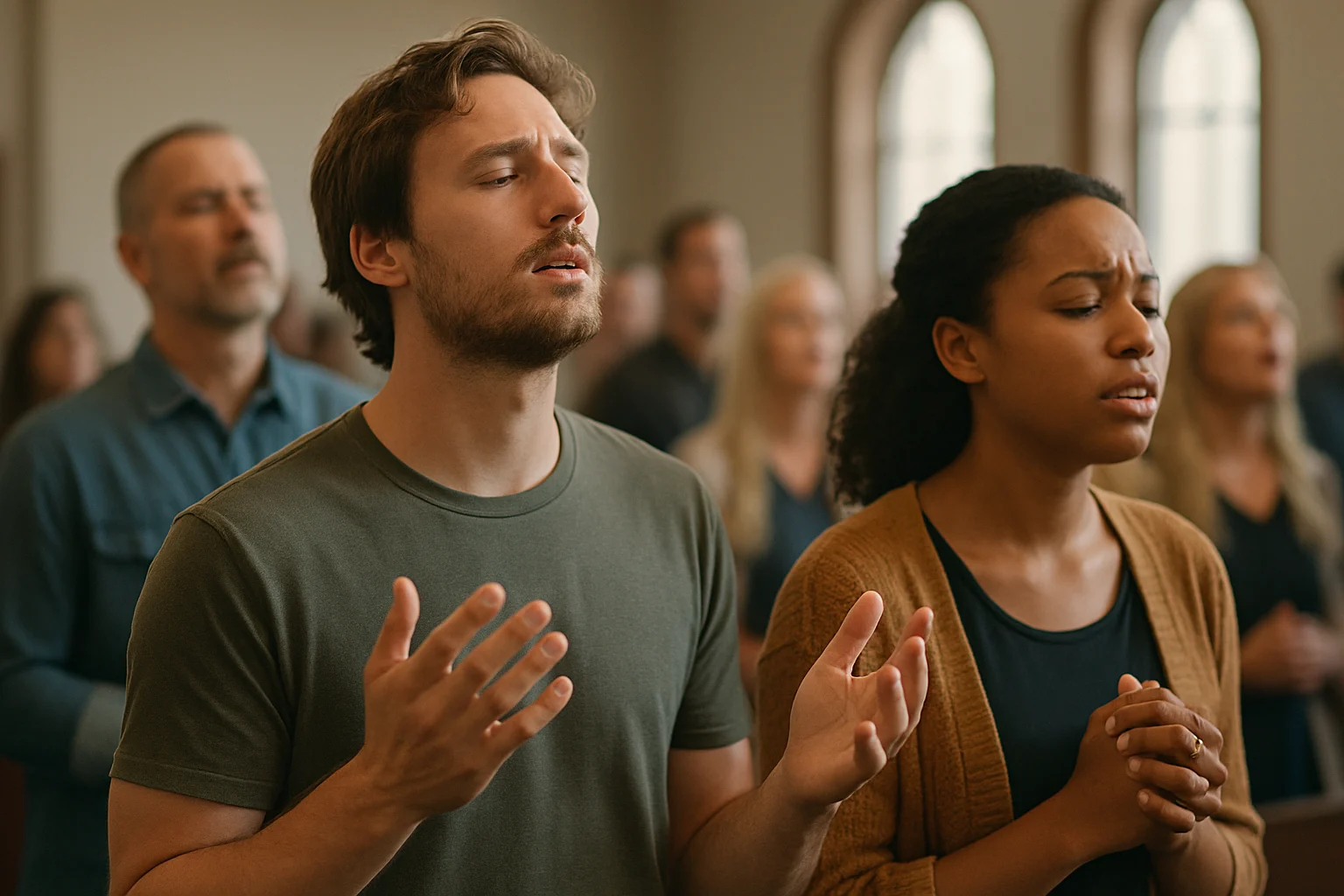
But just this, what does the word worship actually mean? Because it means this thing about really showing the highest form of honor, devotion, or surrender to God. And when I was sitting with this yesterday, I came to this conclusion, which I wrote down. It sounds very nice. Worship is the human response to God’s greatness and holiness, where one bows before him, honors him, and obeys him.

Obeying is a form of attitude. It’s a form of mindset. You give him the honor that belongs to him alone. Worship always points to Jesus. You should be able to see Jesus in our worship.

And when I was thinking about this yesterday, a sentence came to me, and it’s that the encounter with God’s holiness must lead to a changed attitude in our lives. Let me say it one more time. The encounter with God’s holiness must lead to a changed attitude in our lives.

Because God is holy, he is sovereign, he is almighty. But the fact that God is holy means that sin is a no. It means we can’t think we want to serve God and at the same time choose to live in what God hates. They are opposites. They don’t go together.

So when the encounter with God’s holiness meets us, it must lead to a changed attitude in our lives. And these are radical choices. What are you filling yourself with? I mean, what are you looking at? What are you listening to? What kind of conversations are you involved in? Are you filling yourself with frustration? Or are you training the fruits of the spirit?

What’s happening inside you, you know? What kind of inner mindset do you have? And are you hungry when you come to God? Or have you been satisfied with all the other things you’ve filled yourself with? Because if we fill ourselves with all the other things, we end up being full when we come to God. And then we’re not really that hungry for what he has because we’ve satisfied ourselves elsewhere.

So, I also think that if you feel like you’re not hungry when you come to God, then maybe just ask Him today. God, am I filling myself with something else? What is it that I’m filling myself with? And these are things we can do, things we can change in our lives that might, in a way, bring us closer to God or make us live more radically with Him.

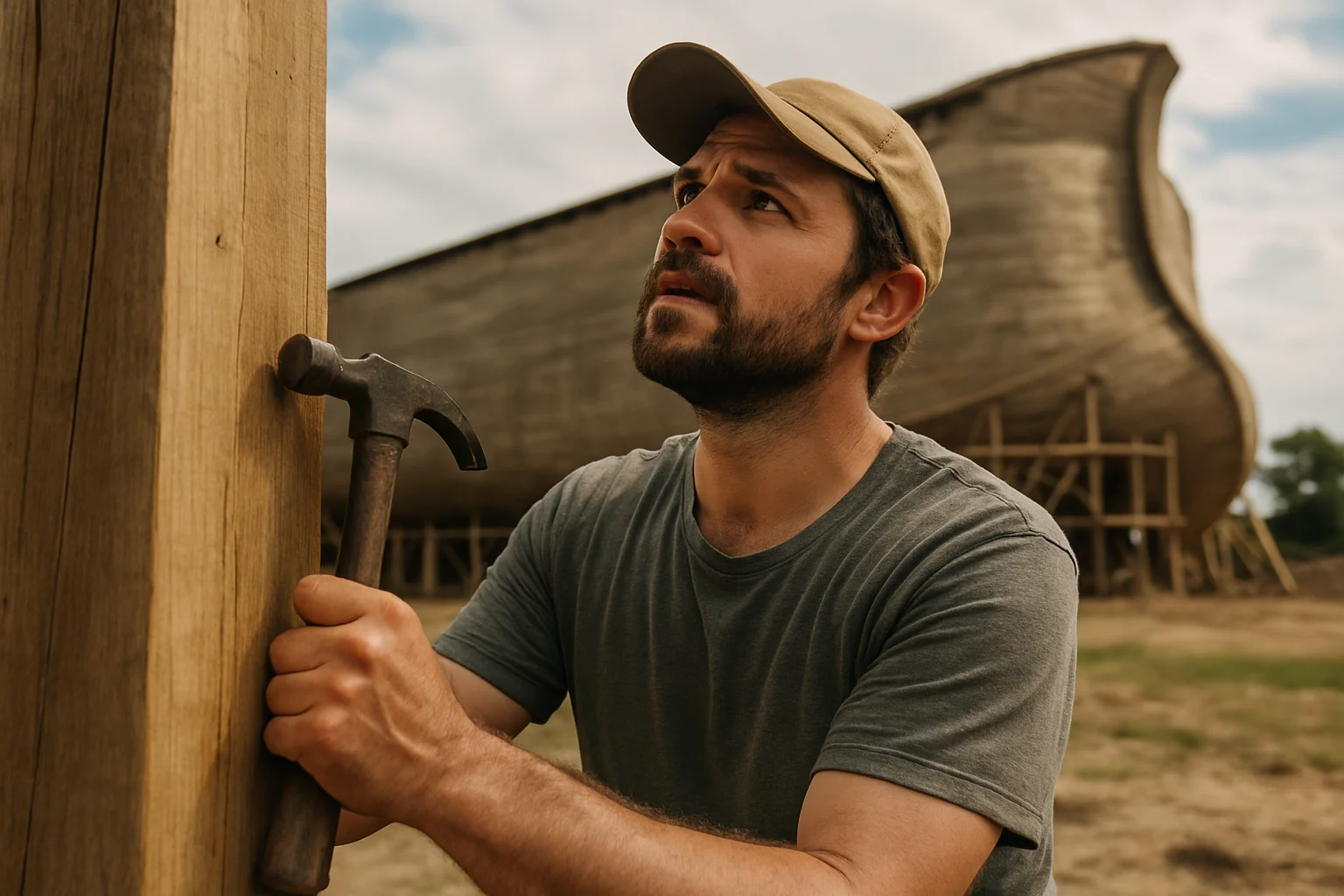
But a life of worship is just as much about the choices you don’t make. Because if God asks you to do something and you don’t do it, that’s not a life of worship. Worship and obedience are so closely linked. If God has asked you to do something and you don’t do it, that’s disobedience. That’s not worship.

And it says in Hebrews chapter 12, verse 14: Make every effort to live in peace with everyone and to be holy; without holiness, no one will see the Lord. Without holiness, no one will see the Lord. And I actually think that’s a key in our life with God. Because holiness is so important in our encounter with God.

But talking about worship can seem a bit abstract. But I want to share an example from the Bible that has really spoken to me recently about a man who truly lived in worship. And that’s Abraham. So, I’m going to talk a bit about him.

But first, I want to read a passage for you from the Bible. It’s in Genesis chapter 22, I think. Verses one to, let me see. I wrote it down here. One to 14. What I’m reading now is about the passage where Abraham is on his way to sacrifice his son Isaac. An act of obedience or an act of worship, you could say. It’s a bit long, but just follow along. That was Genesis 22.

Later, God tested Abraham’s faith and obedience. It happened like this. God called to Abraham. Yes, Lord, he answered. I’m listening. Take your only son Isaac, whom you love so much, and go to the region of Moriah. Sacrifice him there as a burnt offering on a mountain I will show you.

Early the next morning, Abraham got up and called two of his young servants. He asked them to chop wood for the fire that would be used for the burnt offering and to prepare a donkey for the journey. Then he called Isaac, and they set out for the place God had told him about.

After traveling for two days, Abraham saw the place in the distance. Stay here with the donkey, Abraham told the servants, while the boy and I go over there to worship the Lord. We will come back to you. Abraham placed the wood for the offering on Isaac’s shoulders, but he himself carried the fire and the knife. The two of them went on together.

Father, Isaac said. Yes, my son. We have the fire and the wood, but where is the lamb for the burnt offering? God himself will provide the lamb, my son, Abraham replied. And the two of them went on together in silence.

When they reached the place God had told him about, Abraham built an altar there and arranged the wood on it. He bound his son Isaac and laid him on the altar, on top of the wood. Then he reached out his hand and took the knife to slay his son.

But the angel of the Lord called out to him from heaven, “Abraham, Abraham.” “Here I am,” he replied. “Do not lay a hand on the boy,” he said. “Do not do anything to him. Now I know that you fear God, because you have not withheld from me your son, your only son.” Abraham looked up and there in a thicket he saw a ram caught by its horns.

He went over and took the ram and sacrificed it as a burnt offering instead of his son. So Abraham called that place The Lord Will Provide. And to this day it is said, “On the mountain of the Lord it will be provided.”

And this is probably a story you’ve heard a few times. But what’s interesting is that this specific passage in the Bible is the first time the word worship is mentioned. The first time the word worship is mentioned in the Bible is here. It’s here where he says in verse five. Abraham tells his servants that he and Isaac are going up to worship the Lord and will come back to them.

And this is where the act he’s talking about, which is worship, is to sacrifice his son. It’s the first time the word worship is mentioned. And I find that interesting. Interesting because, for me, this act might seem more like an act of obedience than worship. But that’s probably because they are so closely related.

First of all, I want to give a bit of background on this act because when I read this, I thought, what kind of environment did Abraham grow up in? Did Abraham have a family that believed in God, or was it idol worship like everywhere else at that time? And Abraham did not grow up in an environment where worshiping only God was normal because there was worship of so many other gods. Even Abraham’s father worshiped other gods.

And so, I think I’ll try to make a little timeline of what happens in Abraham’s life and how significant it is that he’s willing to sacrifice Isaac. Because when Abraham, or when Abraham was 75 years old, God called him and gave him a promise. When he was between 75 and 85 years old, God kept repeating the promises. He expanded them.

And when he was 85 years old, after they had received the promise that he would become the father of a great nation, they became a bit impatient. For now, it had been 10 years since they received the promise, and he was 85 years old. So Sarah went to Abraham and said, if you can have my slave woman Hagar, try it. Maybe God will give us a son through her. That’s 10 years after he received the promise. That’s when he was around 85 years old.

When he was 86, Ishmael was born, the son Abraham had with the slave woman. When he was 99, God renewed the promises. He gave them, he gave Abraham and Sarai new names, so they became Sarah and Abraham. And Sarah was promised that she would bear the promised child.

And when he was 100, Isaac was born. And then Abraham died when he was 175 years old. But it’s very interesting because the promise Abraham received is, you could say, divided into three parts. It’s divided into being promised a people. Abraham would become the father of a great nation. Despite being childless at the time, he was promised a land. God would give his descendants a land to live in. And he was promised a blessing. It says: Through Abraham, or through Abraham, all peoples on earth will be blessed.

And that’s the promise Abraham has to hold on to. Abraham actually waits 25 years for Isaac. From the time he receives the promise until Isaac is born, 25 years pass. And I just think, if I had waited 25 years for something that truly, truly, truly mattered, and that God had given so many promises about, would I be as willing as Abraham was to just offer it to God? 25 years. And I think maybe I want to ask you a question.

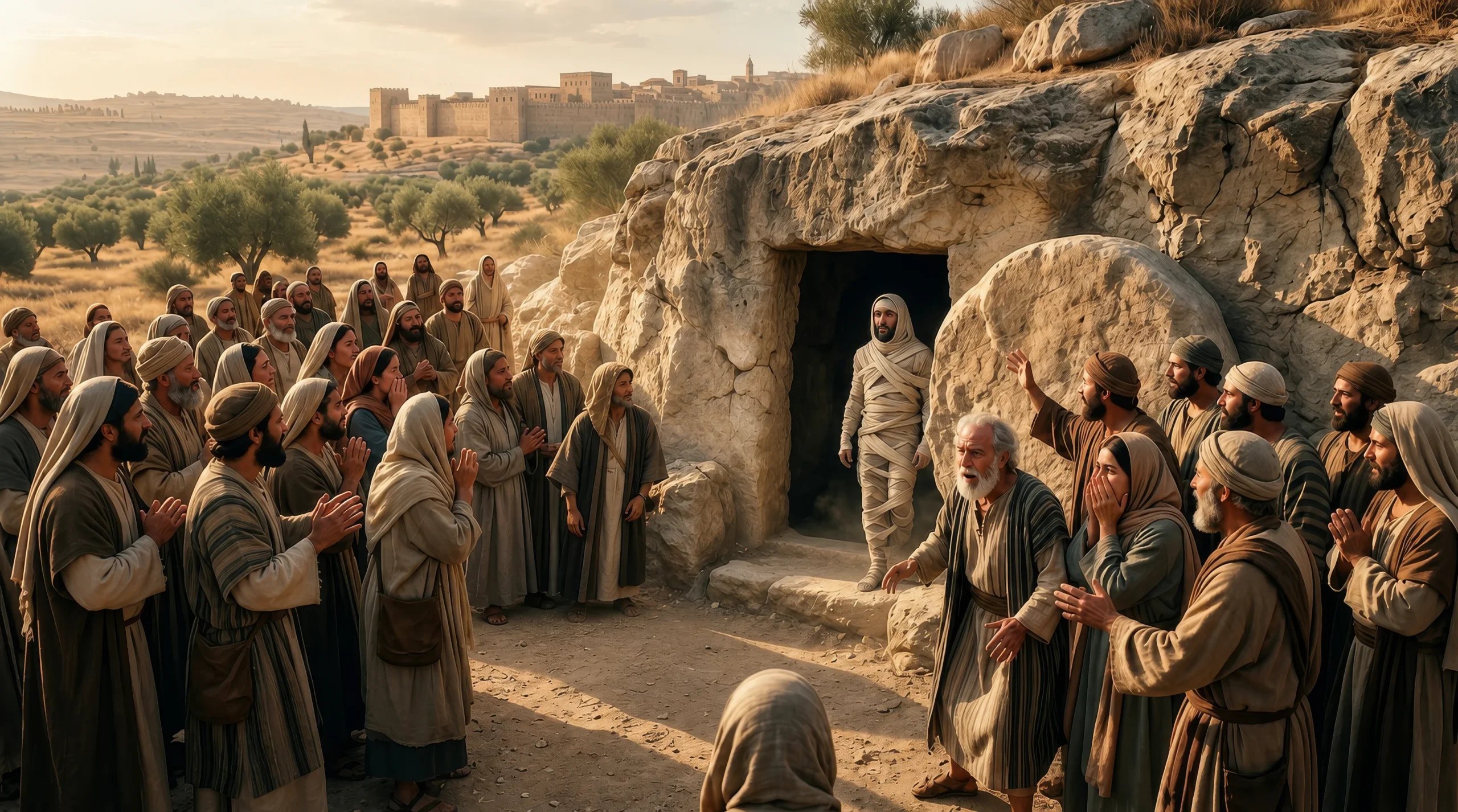
How would you react if God asked you to let go of something so precious to you? Something you loved the most. And this idea that Abraham’s act of obedience becomes worship. And it actually becomes worship that points to Jesus. I find that interesting, and I actually want to delve into that a bit because the whole passage I just read points so much to Jesus. It’s directly prophetic about Jesus too.

But what’s also a bit special, which I just want you to notice, is that all these things, the prophetic images of Jesus and such, they only happen through action, in Abraham stepping out in faith. That’s where the image of Jesus becomes visible. For example, in verse six, we see Isaac as a picture of Jesus because it says Isaac carries the wood for the offering up the mountain himself. Jesus carried the cross up the mountain himself.

In verses seven to eight, Abraham prophesies about the lamb that God will provide. That’s where Isaac asks, “Father, we have the wood, but where is the lamb?” And Abraham says, “God will provide the lamb.” And notice here, he says “lamb.” God will provide the lamb. And God does provide the sacrificial animal. When Isaac is about to be sacrificed, God says no and sends a ram.

What’s interesting about this ram is that its horns or head are caught in a thicket, which in some way becomes an image of Jesus’ head wrapped in thorns. And what’s also interesting is why God sends a ram when Abraham was talking about a lamb. But it’s because it’s a double prophecy. God provides the ram for this offering. But it’s also a prophecy about what will happen one day, that God will indeed provide the lamb. The perfect sacrificial lamb, which is Jesus.

And beyond that, there’s a much deeper faith rooted in Abraham because he has this promise that his descendants will be numerous. But it can only be fulfilled through Isaac because that was the promise, that through Isaac his descendants would be numerous. This means that if he goes up and sacrifices Isaac, he has a problem because God’s word wouldn’t hold if Isaac were to die.

But what’s interesting is in Hebrews 11:19, the great chapter of faith, it says: Abraham reasoned that God could raise Isaac from the dead if necessary. He received him back as a symbol of Jesus’ resurrection from the dead. And elsewhere in Hebrews 11, it says that in faith, Abraham was willing to sacrifice. He had greater assurance in the unseen than in the seen, so he was willing to sacrifice.

And here was another image of Jesus in worship. The fact that Isaac came back to life was meant to be an image of Jesus’ resurrection. And I just find that super interesting because I’ve now mentioned so many images of Jesus through an act of obedience or really an act of worship, as it says, “We will go up and worship the Lord.” So through Abraham’s worship, it points to Jesus, and we can see Jesus through worship. And I think that’s quite interesting.

I think, just to emphasize what I’ve said so many times now, is that worship isn’t just verbal with your words, but the attitude and obedience when God calls, that’s a life of worship.

So, to wrap this up, I think I’ll ask you two questions or something like that. Is there something in your life where God has called you to act in obedience or worship, but you haven’t done it? And what will you do about it?

And then the question: How can your worship point to Jesus? How can your worship point to Jesus?

Close