Matthew 18:21-35:
Then Peter came to him and asked, “Lord, how many times must I forgive my brother when he sins against me? Up to seven times?” Jesus said to him, “I tell you, not up to seven times, but up to seventy times seven. Therefore, the kingdom of heaven is like a king who wanted to settle accounts with his servants. As he began the settlement, a man who owed him ten thousand talents was brought to him. Since he had nothing to pay with, his master ordered that he and his wife and children and all he had be sold, and the debt paid. The servant fell on his knees before him and pleaded, ‘Be patient with me, and I will pay it all back.’ The servant’s master took pity on him, released him, and forgave the debt. But as that servant went out, he found one of his fellow servants who owed him a hundred denarii. He grabbed him by the throat and said, ‘Pay what you owe!’ His fellow servant fell down and pleaded with him, ‘Be patient with me, and I will pay you back!’ But he refused. Instead, he went and had the man thrown into prison until he could pay the debt. When the other servants saw what had happened, they were greatly distressed and went and told their master everything that had happened. Then the master called the servant in and said, ‘You wicked servant! I forgave you all that debt because you pleaded with me. Shouldn’t you also have had mercy on your fellow servant, just as I had mercy on you?’ In anger his master handed him over to the jailers until he should pay back all he owed. This is how my heavenly Father will treat each of you unless you forgive your brother from your heart.”
Genesis 4:6-15:
Then the Lord said to Cain, “Why are you angry, and why is your face downcast? Isn’t it true: If you do what is right, you can lift up your head; but if you do not do what is right, sin is crouching at the door. It desires to have you, but you must rule over it.” Later Cain spoke to his brother Abel. While they were in the field, Cain attacked his brother Abel and killed him. Then the Lord said to Cain, “Where is your brother Abel?” He answered, “I don’t know. Am I my brother’s keeper?” The Lord said, “What have you done? Your brother’s blood cries out to me from the ground. Now you are cursed and driven from the ground, which has opened its mouth to receive your brother’s blood from your hand. When you work the ground, it will no longer yield its crops for you. You will be a restless wanderer on the earth.” Cain said to the Lord, “My punishment is more than I can bear. Today you are driving me from the land, and I must hide from you; I will be a restless wanderer on the earth, and whoever finds me will kill me.” But the Lord said to him, “If anyone kills Cain, he will suffer vengeance seven times over.” Then the Lord put a mark on Cain so that no one who found him would kill him.
Genesis 4:23-24:
Lamech said to his wives, Adah and Zillah, hear my voice; Lamech’s wives, listen to my words: I kill a man for wounding me, a young man for striking me. If Cain is avenged seven times, then Lamech seventy-seven times.
Luke 15:11-32:
He also said, “There was a man who had two sons. The younger said to his father, ‘Father, give me the share of the estate that belongs to me.’ So he divided his property between them. A few days later the younger son gathered all he had and traveled to a distant country, and there he squandered his wealth in wild living. After he had spent everything, a severe famine came over that whole country, and he began to be in need. So he went and attached himself to a citizen of that country, who sent him into his fields to feed pigs. He longed to fill his stomach with the pods that the pigs were eating, but no one gave him anything. When he came to his senses he said, ‘How many of my father’s hired servants have food to spare, and here I am starving to death! I will set out and go back to my father and say to him: Father, I have sinned against heaven and against you; I am no longer worthy to be called your son. Make me like one of your hired servants.’ So he got up and went to his father. But while he was still a long way off, his father saw him and was deeply moved with compassion; he ran to his son, threw his arms around him, and kissed him. The son said to him, ‘Father, I have sinned against heaven and against you; I am no longer worthy to be called your son.’ But the father said to his servants, ‘Quick! Bring the best robe and put it on him. Put a ring on his hand and sandals on his feet. Bring the fattened calf and kill it. Let’s eat and celebrate. For this son of mine was dead and is alive again; he was lost and is found.’ And they began to celebrate. Meanwhile, the older son was in the field. As he came near the house, he heard music and dancing. He called one of the servants and asked what was going on. ‘Your brother has come,’ he replied, ‘and your father has killed the fattened calf because he has him back safe and sound.’ The older brother became angry and refused to go in. So his father went out and pleaded with him. But he answered his father, ‘Look! All these years I’ve been serving you and never disobeyed a single command of yours, yet you never gave me even a young goat so I could celebrate with my friends. But when this son of yours who has squandered your property with prostitutes comes home, you kill the fattened calf for him!’ The father said to him, ‘My child, you are always with me, and everything I have is yours. But we had to celebrate and be glad, because this brother of yours was dead and is alive again; he was lost and is found.’”
1 Samuel 18:6-12:
When the army was returning home, after David had killed the Philistine, the women came out from all the towns of Israel to meet King Saul with singing and dancing, with tambourines, shouts of joy, and lyres. As they danced, the women sang in chorus: “Saul has slain his thousands, and David his tens of thousands.” Saul was very angry; this refrain displeased him. He said, “They credit David with tens of thousands, but me with only thousands. What more can he get but the kingdom?” From that day on Saul kept a jealous eye on David. The next day an evil spirit from God came forcefully on Saul; he raved inside the house. David was playing the lyre, as he usually did, while Saul had a spear in his hand. Suddenly Saul hurled the spear, thinking, “I’ll pin David to the wall!” But David eluded him twice. Saul was then afraid of David, because the Lord was with David but had left Saul.
Jonah 1:1-3 and 3:1-10; 4:1-3:
The word of the Lord came to Jonah son of Amittai: “Get up, go to Nineveh, that great city, and proclaim against it, for their wickedness has come up before me.” But Jonah ran away from the Lord and headed for Tarshish. He went down to Joppa, found a ship bound for Tarshish, paid the fare, and went aboard to sail for Tarshish to flee from the Lord. — The word of the Lord came to Jonah a second time: “Get up, go to Nineveh, that great city, and proclaim to it the message I give you.” Jonah obeyed the word of the Lord and went to Nineveh. Now Nineveh was a very large city; it took three days to go through it. Jonah began by going a day’s journey into the city, proclaiming, “Forty more days and Nineveh will be overthrown!” The Ninevites believed God. They declared a fast, and all of them, from the greatest to the least, put on sackcloth. When Jonah’s warning reached the king of Nineveh, he rose from his throne, took off his royal robes, covered himself with sackcloth, and sat down in the dust. Then he issued a proclamation in Nineveh: “By the decree of the king and his nobles: Do not let people or animals, herds or flocks, taste anything; do not let them graze or drink water. But let people and animals be covered with sackcloth. Let everyone call urgently on God. Let them give up their evil ways and their violence. Who knows? God may yet relent and turn from his fierce anger so that we will not perish.” When God saw what they did and how they turned from their evil ways, he relented and did not bring on them the destruction he had threatened. But to Jonah this seemed very wrong, and he became angry. He prayed to the Lord, “Ah, Lord! Isn’t this what I said when I was still at home? That is what I tried to forestall by fleeing to Tarshish. I knew that you are a gracious and compassionate God, slow to anger and rich in faithful love, who relents from sending calamity. Now, Lord, take away my life, for it is better for me to die than to live.”
Matthew 9:1-8:
Jesus stepped into a boat, crossed over, and came to his own town. Some men brought to him a paralyzed man, lying on a mat. When Jesus saw their faith, he said to the paralyzed man, “Take heart, son; your sins are forgiven.” At this, some of the teachers of the law said to themselves, “He’s blaspheming!” Knowing their thoughts, Jesus said, “Why do you entertain evil thoughts in your hearts? Which is easier: to say, ‘Your sins are forgiven,’ or to say, ‘Get up and walk’? But so that you may know that the Son of Man has authority on earth to forgive sins”—he then said to the paralyzed man—“Get up, take your mat, and go home.” And the man got up and went home. When the crowds saw this, they were filled with awe and praised God, who had given such authority to men.
Matthew 6:9-12; 14-15:
“This, then, is how you should pray: Our Father in heaven, hallowed be your name; your kingdom come; your will be done, on earth as in heaven. Give us today our daily bread. And forgive us our debts, as we also have forgiven our debtors. And lead us not into temptation, but deliver us from evil. For if you forgive others when they sin against you, your heavenly Father will also forgive you. But if you do not forgive others, your Father will not forgive your sins.”
Mark 11:25-26:
“And when you stand praying, forgive if you hold anything against anyone, so that your Father in heaven may forgive you your trespasses. But if you do not forgive, neither will your Father in heaven forgive your trespasses.”
Ephesians 4:26-27:
“In your anger do not sin”; do not let the sun go down while you are still angry, and do not give the devil a foothold.
Proverbs 19:11:
A person’s wisdom yields patience; it is to one’s glory to overlook an offense.
Job 42:7-10:
After the Lord had said these things to Job, he said to Eliphaz the Temanite, “My anger burns against you and your two friends, because you have not spoken the truth about me, as my servant Job has. Now take seven bulls and seven rams and go to my servant Job and sacrifice a burnt offering for yourselves. My servant Job will pray for you, and I will accept his prayer and not deal with you according to your folly. You have not spoken the truth about me, as my servant Job has.” So Eliphaz the Temanite, Bildad the Shuhite, and Zophar the Naamathite went and did as the Lord had told them, and the Lord accepted Job’s prayer. The Lord restored Job’s fortunes when he prayed for his friends, and the Lord gave Job twice as much as he had before.
1 John 2:9-11:
Anyone who claims to be in the light but hates a brother or sister is still in the darkness. Anyone who loves their brother or sister lives in the light, and there is nothing in them to make them stumble. But anyone who hates a brother or sister is in the darkness and walks around in the darkness. They do not know where they are going, because the darkness has blinded them.
1 John 3:15-16:
Anyone who hates a brother or sister is a murderer, and you know that no murderer has eternal life residing in them. This is how we know what love is: Jesus Christ laid down his life for us; and we ought to lay down our lives for our brothers and sisters.
Luke 23:33-34:
When they came to the place called The Skull, they crucified him there along with the criminals—one on his right, the other on his left. Jesus said, “Father, forgive them, for they do not know what they are doing.”
Psalm 103:11-12:
For as high as the heavens are above the earth, so great is his love for those who fear him. As far as the east is from the west, so far has he removed our sins from us.
Micah 7:18-19:
Who is a God like you, who pardons sin and forgives the transgression of the remnant of his inheritance? You do not stay angry forever but delight to show faithful love. You will again have compassion on us; you will tread our sins underfoot and hurl all our iniquities into the depths of the sea.
Romans 8:1:
Therefore, there is now no condemnation for those who are in Christ Jesus.
– Forgiveness isn’t an “add-on” to the Christian life, but the very road to freedom, wholeness, and fellowship with God.
– Bitterness steals peace, pushes God’s love away, and hardens the heart; forgiveness breaks chains and opens the door to the Holy Spirit’s life.
– We’re urged to forgive quickly and specifically—not to put a lid on it, but to settle matters before “the sun goes down.”
– Andreas Slot-Henriksen teaches here how Jesus’ call to love and forgive also includes our enemies—and why God’s way always sets us free.
– Deliberate forgiveness is a choice, not a feeling; when the will leads, the heart follows, and God restores.
– Pray for the one who hurt you; prayer can turn enemies into friends—and loosen the other person’s guilt and shame.
– Learn to forgive both others and yourself; without self-forgiveness, it’s hard to love your neighbor as yourself.
– Forgiveness doesn’t mean everything must be as before; it means the chains are broken, and you can say hi without a knot in your stomach.
Peter asks Jesus whether seven times is enough to forgive, and Jesus answers with a radical standard that blows past our limits. Is it enough just to believe, or does it require an active choice and an offering? When someone hurts us again and again, everything in us screams for justice, distance, or payback. But Jesus looks into the heart and calls us to another way. He points to forgiveness as a lifestyle—not a careful compromise—but a brave response to God’s own mercy.
Jesus’ “77 times” challenges our scorekeeping. It’s not about counting, but about resembling God in practice. There’s a historical echo back to Cain and Lamech, where vengeance escalates. Jesus reverses that stream and builds a Kingdom culture where grace has the final word. We see the same pattern in the older brother in “the prodigal son”: bitterness blinds us so we lose the joy over restoration. And Saul’s anger toward David shows how jealousy and wounded ambition can slowly wear down the soul when forgiveness is missing.
Even when God calls us to bless our “Nineveh,” we can sit like Jonah, upset that mercy got through. What happens when my perspective gets narrow and self-absorbed? Bitterness grows, and in the end you stare more at your own navel than at God’s heart. Research confirms what we already know in the spirit: bitterness binds the body with stress and unrest, while forgiveness brings calm, lowers the pulse, and strengthens well-being. It’s as if God built a “health track” into our bodies that confirms His way.
When Jesus meets people, forgiveness is often the key that opens the miracle. We see Him first declare forgiveness—and then sickness loses its grip. Not as a cold formula, but because guilt, shame, and brokenness weigh heavy. That’s why the Lord’s Prayer about forgiveness isn’t just beautiful poetry; it’s a spiritual principle that shapes our lives: as we forgive, we receive. Without forgiveness we lock the door to God’s flow of grace in our own hearts. This isn’t hard talk to beat us down—it’s truth meant to set us free.
Forgiveness releases. The word points to letting go, releasing captive IOUs in the heart. If we hold on, cords begin to tighten around the soul. We feel it as a short fuse, as disproportionate reactions to small things, as an inner knot. If we put a lid on it, we might “forget” the pain, but the cookie in the tin goes moldy. When life shakes the tin, the stench comes back up. That’s why we’re called to make the choice now—not in a week. God’s timing is “today.”
That includes self-forgiveness. Many can forgive others more easily than themselves. The voice of self-condemnation lies: “You’re too much, too little, too late, too stupid.” But when Jesus has forgiven, who are we to speak down about what He has cleansed? We are God’s temple, and when we speak rottenly about ourselves, we speak rottenly about His dwelling. Learn to thank God for who you were made to be; thank Him in the mirror in the morning. Jesus’ finished work defines you—not your past, not your mistakes, not others’ judgments.
Job is a strong picture of how breakthrough comes when the heart chooses God’s way. In the middle of unfair accusations he was told to pray for his friends. He could have clung to wounded pride, but he chose to bless—and then God turned everything around. That’s how God’s Kingdom works: when we intercede for those who did wrong, Heaven breaks in and the burdens lift. Hate keeps us in the dark; love brings us back into the light.
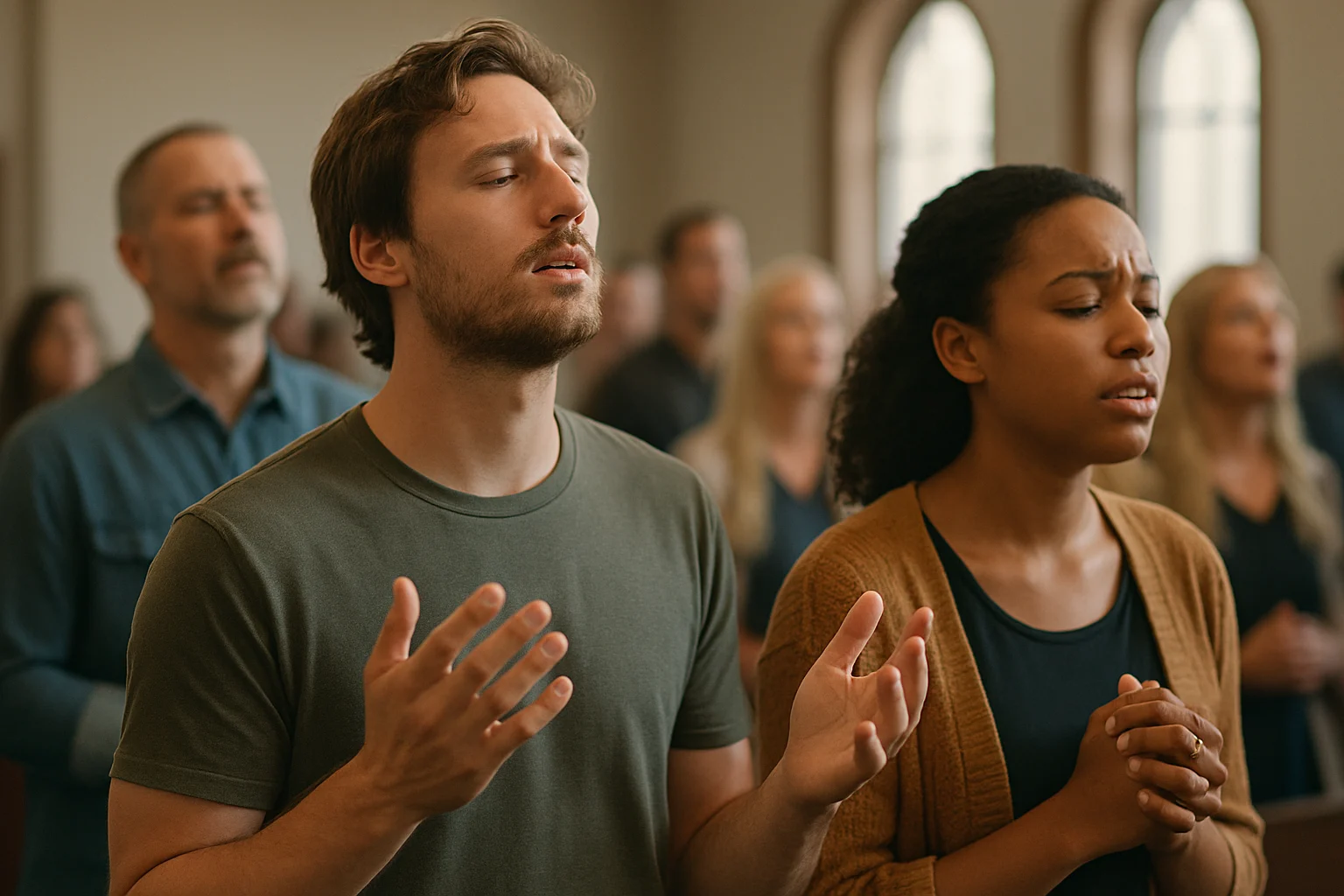
How do we do this in practice? Start with an honest choice: “Jesus, I choose to forgive.” Be specific: name the person, the event, and what it did in you—“I forgive for that betrayal, for that humiliation, for the fear it planted.” After that, ask for God’s blessing over the person. Pray for dreams, people, and opportunities on their path. You’ll often discover the other person’s hidden guilt lifts when forgiveness is spoken. And you’ll feel chains fall off your own shoulders. Forgiveness doesn’t mean boundaries disappear. You can keep healthy distance. But if you still feel the knot in your stomach, there’s more to let go of.
When wounds are neglected, they get infected—spiritually we call that bitterness. It makes you start building walls to protect yourself; but the wall also blocks God’s love. The solution isn’t to hide, but to bring it into the light before God and let Him cleanse. Remember: forgiveness isn’t a feeling—it’s faith in action. Feelings follow. Walk this road with the Holy Spirit, even when it costs tears. Choose the light again and again. Pray for your enemies again and again. Don’t count—love.
When you meet the person on the street, you should be able to say hi without stomach cramps. If you can’t do that yet, keep going in the process. Pray, bless, and be specific in your confession. And if old memories pop up, bring them to Jesus right away and forgive that single episode too. Every time you do, you build a bridge, not a wall. You open your heart to God’s flow of life, peace, and strength.
Quote from the teaching: “Forgiveness sets free—both the other person and you.”
Relevant keywords: forgiveness – bitterness – prayer for enemies – freedom of the heart – God’s love – grace – healing – restoration – discipleship – spiritual freedom – identity in Christ – forgive yourself – intercession – God’s Kingdom – the way of Jesus