
Opens in a new tab

Who Does Jesus Say I Am?

Who Does Jesus Say I Am?

Who Does Jesus Say I Am?

Three quotes from the teaching on 2025-11-19

Drop the facade, lay the old in the grave, and let Jesus define who you are.

The devil thrives on reminding you of what Jesus has already buried.

Take off your “sandals” so God can wash the dust and lead you.

Short description of the teaching

The teaching unfolds how past words and shame are buried in baptismal waters, allowing a new identity in Jesus to take root. It encourages renewing the mind, breaking free from fear of man, and letting go of the need for approval. God’s fatherly heart is painted warmly and closely, showing how the Holy Spirit dwells in us and ignites gifts for service. Through Moses’ encounter at the burning bush, the way is shown: lay down the old, say yes to the call, and let the truth set you free.

Watch the teaching here...

Watch the teaching directly on YouTube here: https://youtu.be/F9LdVRMfA4I

We depend on you!!

You can support “Stenslyngen” (the stone sling) and LytTilJesus.dk through “Rescue Team”, which has a fundraising permit:

Click here and support our work

This teaching is categorized within the following topics:
– click on them to see more relevant teaching

Did you know you can listen to the newest teaching as a podcast on e.g. Spotify and Apple Music?

Click here to listen: https://li.sten.to/lyttiljesus

  • Scriptures from the teaching on 'Who Does Jesus Say I Am?'

2 Corinthians 5:17: Therefore, if anyone is in Christ, he is a new creation. The old has passed away; behold, the new has come.

1 Corinthians 1:2: To the church of God, those sanctified in Christ Jesus, called to be saints, together with all those who in every place call upon the name of our Lord Jesus Christ, both their Lord and ours.

2 Timothy 1:6-10: For this reason I remind you to fan into flame the gift of God, which is in you through the laying on of my hands. For God gave us a spirit not of fear but of power and love and self-control. Therefore do not be ashamed of the testimony about our Lord, nor of me his prisoner, but share in suffering for the gospel by the power of God, who saved us and called us to a holy calling, not because of our works but because of his own purpose and grace, which he gave us in Christ Jesus before the ages began, and which now has been manifested through the appearing of our Savior Christ Jesus, who abolished death and brought life and immortality to light through the gospel.

1 John 1:9: If we confess our sins, he is faithful and just to forgive us our sins and to cleanse us from all unrighteousness.

Matthew 28:20: And behold, I am with you always, to the end of the age.

Hebrews 13:5: Keep your life free from love of money, and be content with what you have, for he has said, “I will never leave you nor forsake you.”

NB! The summary below is an automatically AI-generated text from the teaching itself. Errors may occur to a greater or lesser degree!!
Watch the whole teaching on YouTube instead!!

  • Summary of the teaching on 'Who Does Jesus Say I Am?'

– Who shapes your identity: past wounds, people’s words, or God’s truth?- Baptism means the old life – including the old identity – is buried, and that’s where it should stay.- The mind needs renewal so that past lies don’t control the present.- God is a good Father who loves, nurtures, and calls – not a harsh judge who pushes away.- Let go of the need for human approval; find rest in being God’s child.- The Holy Spirit dwells in you; you are a temple equipped with gifts for service.- Lay down the excuses like Moses laid down his sandals; say yes to God’s call.- The truth from God’s word exposes lies and sets you free in practice.

The teaching opens with a poignant story about Michael, a man with a nice facade but an inner self worn down by small, toxic words from childhood and youth. Bullying, shame, and feeling like a mistake drove him to overachieve at work, but inside he was empty. Here, the teaching points out how many of us carry hidden wounds that dictate how we see ourselves and others. Often, we build walls to survive, and recognition feels like oxygen while loving words bounce off. Amidst this, faith in Jesus creates a crack in the wall: What if everything that has defined you isn’t true? “Andreas Slot-Henriksen” teaches here that the gospel doesn’t just patch up our story – it gives us a new identity in Jesus.

It cuts to the bone when talking about the reality of baptism: In baptism, the entire old life is buried – including harsh words, shame, and wrong labels. Therefore, the old shouldn’t come out of the grave again. Yet, the enemy tries to drag out the old junk: “Remember who you were? You’re still a mistake.” The answer is to renew the mind, make conscious choices, and replace lies with truth. A powerful scripture here is: “If anyone is in Christ, he is a new creation. The old has passed away, behold, the new has come!” It’s not about convincing yourself of something, but believing what God already says about us.

The teaching also unveils how a distorted experience of an earthly father can color our image of God. If “father” for you means absence, harsh criticism, or unpredictability, it makes sense that the word “God’s child” doesn’t feel safe. Therefore, we must learn to know God as He truly is – a good Father under the new covenant, who receives, guides, and equips. He doesn’t scold to break us; He lifts us up, gives us “a fishing rod,” and teaches us to fish. The point is underscored with a down-to-earth story about not having someone to disciple you: without guidance, fishing became defeat and identity. Similarly, lack of spiritual guidance can make us discouraged. The solution is to let ourselves be discipled – get a companion – and start walking in what God has already placed in us.

Moses’ encounter with God at the burning bush becomes a powerful image: God says he should take off his sandals because he stands on holy ground. When Moses takes off his sandals, he also symbolically lays down the old – the flight, the guilt, and the shame – and prepares to be led. It becomes concrete for us today: Will I take off my “sandals” and let God wash my dust – even though He sees my holey socks? Will I drop the excuses and trust that He is right about who I am? For God knows our weaknesses and often gives us a companion – like Aaron for Moses – but He still calls us by name and says: Go!

A central theme is the battle between three voices: the world, the enemy, and Jesus. The world says: “You are worthless.” The enemy amplifies: “You mean nothing – not even to God.” Jesus says: “You are my child. I love you. I gave my life for you.” Who do I choose to believe? When loneliness, shame, and memories of failure arise, Jesus’ promise sounds: “And behold, I am with you always, to the end of the age.” It’s not psychology; it’s covenant words from the Lord Himself. And when we fall, the way back is not self-condemnation, but repentance and confession, for God is faithful and cleanses us completely.

It is pointed out that many never fully step into service because they remain stuck in the identity “I am just a sinner.” Yes, we were sinners – that’s why Jesus died – but in Him, we are born again and called into holiness. Holiness is not boasting; it’s living in what Jesus won for us. When the Holy Spirit dwells in us, we are God’s temple. It’s deep: The same power that raised Jesus from the dead lives in you. Therefore, it makes no sense to call oneself worthless while saying the Holy Spirit dwells in one. Identity and calling are connected: Through the Holy Spirit, we have gifts that should “flame up” – not for our ego, but so that people can meet Jesus through a life of love, power, and sound judgment.

Practical teaching is given on shifting focus from human recognition to God’s pleasure. Too many chase the praise they never got from dad or mom. But our heavenly Father recognizes us for who we are in His Son – before we do anything. Deeds spring from love, not empty holes in the soul. When we receive that, the courage to be witnesses grows. Even when someone mocks. Because then it’s not about me, but about the gospel that works. Therefore: Let the facade fall, lay the old in the grave, get help to renew the mind, and start acting on God’s truth in everyday life. Take off the shoes so God can wash the dust, and say yes to His guidance.

Finally, there is a call for quiet time with God: What in my identity stands in the way of what He says I am? Where am I still chasing human acceptance? What lies have I believed? Turn the lie 180 degrees – and you often see God’s truth. And the truth is not just theoretical; it carries life, peace, and boldness. When you receive it, it will overflow: You can’t help but talk about Jesus because He has become your identity, your joy, and your strength.

Quote from the teaching: And do you know what sets free? The truth.

Relevant keywords: identity in Christ – baptism and new beginning – renewal of the mind – God’s fatherly love – the Holy Spirit in us – gifts in action – discipleship in everyday life – breaking with shame – freedom in Jesus – calling and service – the truth sets free – spiritual growth – breaking with fear of man – God’s plan for your life – life in holiness


ReadTranscription

Click here to read the full transcription of ‘Who Does Jesus Say I Am?’.

Search for teaching here...

Related teaching

Read the full content of the teaching 'Who Does Jesus Say I Am?'

Please note that there may be deviations and errors, as the text below has been transcribed and adjusted automatically.

One of the most central topics in our faith is, who does Jesus say that I am? Not me, but me, or well, it’s quite hard to explain, but that’s the headline anyway. But I’m actually going to start somewhere completely different. I’m going to start by reading a story about a guy named Michael.

Michael grew up in a home. It was mostly safe and ordinary. Often, he would sit with his mom doing homework, and she’d smile at him when she had the energy. There were bedtime stories and Sunday baking, but sometimes, when the stress was too much or the days too heavy, a word could slip out that stuck in his heart. Like “Michael, you’re just too stupid.” Or “Michael, your thoughts are totally brain-dead.”

Most days, he was met with encouraging comments. Little praises like “well done” or “you’re doing so well.” But it was as if the warm words never really took root. They were drowned out by the echo of earlier jabs, which too quickly took hold in his mind. Especially after his mom told him he was actually a mistake, but they found out too late to have an abortion.

In school, the rare discouraging words quickly became everyday talk. Friends might laugh and say, “you’re just the one who always messes everything up.” Or “do your parents even care about you?” Michael tried to shake it off, but the innocent jabs at home made him vulnerable to the harsher school teasing.

When his mom later succumbed and took her own life, Michael really shut down and didn’t talk about it. He had to be strong for his little sister, but deep inside, he automatically took the blame and carried it all alone. When Michael got to high school, the bullying became more justified. A few students would ask, “Were you ever really welcomed into life by your mom?” Several times, when he made mistakes, it sounded like, “You’re just filler. You contribute nothing.”

When someone praised him for a project, he felt joy. But it quickly vanished, for his mind was like a garden where old toxic seeds choked anything that tried to grow. He threw himself into work and became an expert at delivering results. Professional praise was like oxygen to him, but personal compliments he couldn’t accept. They bounced off as if his inner self had closed off access.

In adulthood, he became known for his achievements, but inside he was still the one who only experienced praise as fleeting glimpses, always overshadowed by old words that should never have been said, and old shame that wouldn’t wash away. As an employee, Michael was everything, but as a person, he was nothing. For inside, he was closed off. He was burning inside. So his anger often went out on those closest to him. And the worst part was, he didn’t even know how broken he was, because his strategy was: survive and show others that you’re not a mistake.

It’s a tough story about Michael, but unfortunately, there are so many who can relate to many aspects of it. Many really have some baggage. Many can really identify with some of these things, and it hurts when you start to think about it.

Many have never really cleaned it up. And many have built an identity that came over their childhood. Because it’s childhood. That’s when we’re receptive. That’s when we listen. That’s when we’re shaped. When we reach our teenage years, that’s when we really start to consider what we believe in.

That’s when we start to consider life. But if these words, which we’ve heard so many times, are the ones that help build us up or rather tear us down, then inside many people, a facade is built to survive. A wall is built so that all the words that come just bounce off. The problem is, we humans, and many, many people know this, we can be told 100 good things, but we don’t listen to them because of that one lousy word we got when we were kids.

That’s how we’re built. That’s how many have taken it in. And it’s deeply frustrating, but nonetheless, that’s just how so many feel. And when you come to faith in Jesus, things start to happen. Some things start to crack. Suddenly you find out, okay, well, it says in God’s word, the Bible, or in the Bible, that Jesus loves me. Ah, that’s probably just on the surface. He probably only loves me on the surface. If he really knew what was truly me, I just don’t think he’d love me, because wow. Because maybe you’ve done a lot of bad things in your life.

And often you’ll also find that much of the bad stuff you’ve done, you’ve actually done to survive. So it’s unconscious junk you’ve done a lot of. Or when others treat me this way, well, I can just treat others the same way, because that’s how life is. Some shut down completely, can’t talk about feelings. If you start talking about feelings with them, just a little too far, either they leave, or they get furious and can’t handle it.

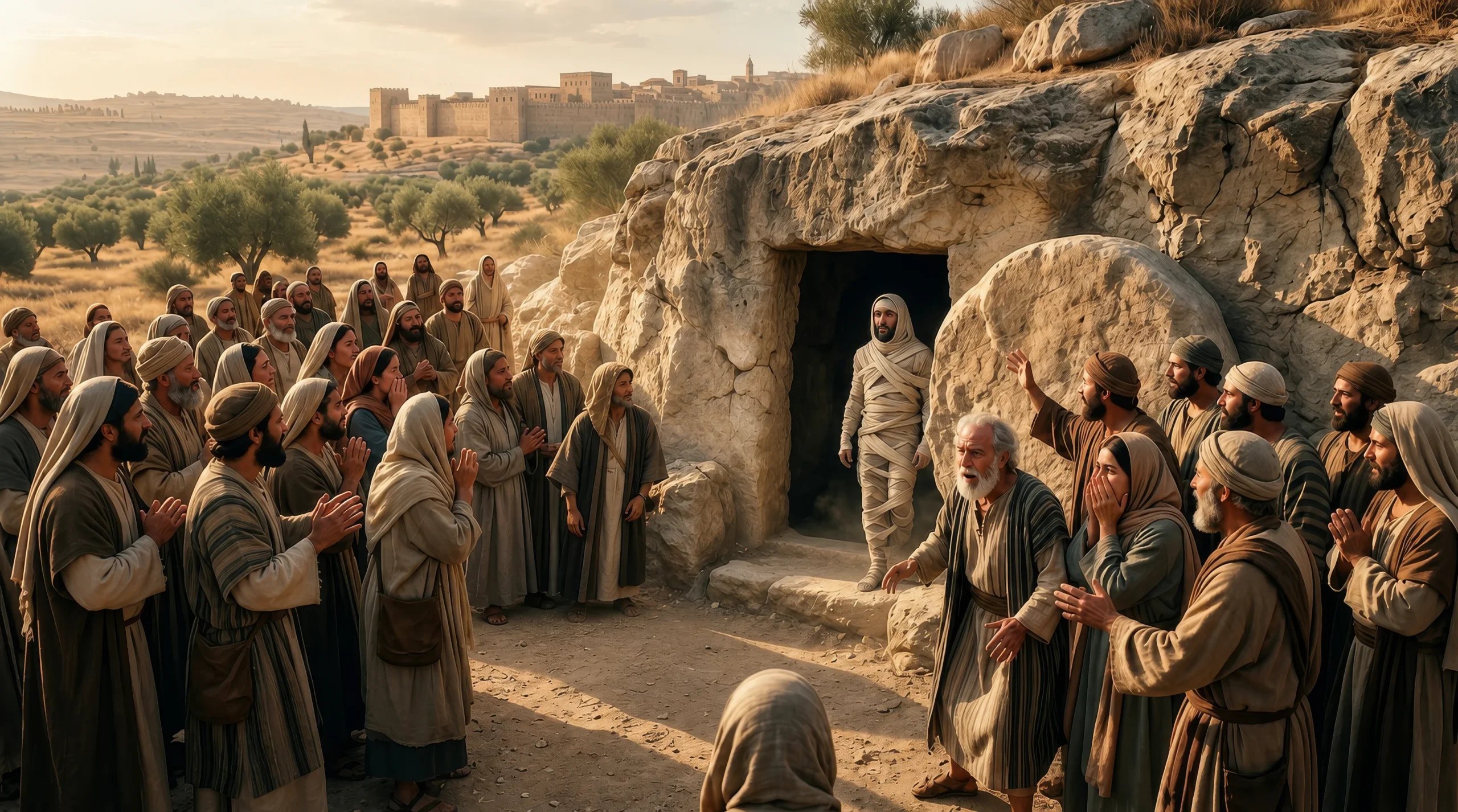
But what we need to figure out is that when we come to faith, and when we bury the old life in the waters of baptism, we bury everything. That means we also bury the old identity. We bury all the words that have been spoken over us. Everything that has shaped our old mind, we bury. That means we don’t pick it up again. And it’s so hard because if there’s something the devil is really, really good at, it’s actually one of the things he’s best at, it’s picking up all the old trash and saying: “Hey, just look at what’s in front of you. What? Uh uh uh. Do you remember that from your past?” And then: “Oh yeah, that’s right. Yes, I was a mistake. I should never have been.”

The Bible says we need to renew our minds. And it’s just super hard when you have this past with you. And yes, sometimes such words can stick like demonic bonds that need to be broken, and then it’s just kapish out with it. But other times, it’s our minds that need renewing. It’s our thoughts that need renewing. And we need to do that with our will. We need to have enormous willpower, enormous steadfastness in it, where we don’t give in, and where we don’t give up.

Our identity, when we have accepted Jesus, should come through our faith. And through that faith, we should ideally reach holiness, because it says in God’s word that he is holy, so we should be holy. And that should ideally lead to reverence.

And now it’s so interesting that if we look at what holiness is, if we believe that we are justified through what Jesus did on the cross, if we believe that he paid the price for us, wow, it also means that we have to believe that if I am holy, my God is, and he says I am holy, then it doesn’t help to simultaneously believe that I am a miserable failure, like maybe my mother committing suicide, just like we heard about Michael. So, that means all the lies the world has tried to tell us, we simply need to puncture them and say, okay, what is God’s truth in this?

So, what we need to do as believers is to deeply figure out all those places where we’ve shut down, find out who we really think we are. Who is it that the past has said I am, that I still believe in? What are the things inside that actually hurt? What hits me when people hear it or when I hear people say it to me? What is it that completely throws me off course?

And sometimes we, as humans, are incredibly good at putting a lid on things. It’s just smart because when we put a lid on things, we can thrive in it. We don’t have to be confronted with it. And it’s not that we should take the lid off and fish everything out, but some of the things under the lid are still unconsciously helping to identify who we are, or rather, who we think we are.

And that means if we dwell on the things we believe we are from the past and find it hard to let go, then we find it incredibly difficult to walk into God’s future. And God has so many plans for you. So many plans that you can’t even comprehend. So many plans for peace and not for disaster and an awesome future and all sorts of amazing things in your life.

But the problem is, it’s so hard to accept if the core essence is that we feel wrong, if we’ve been told we’re a failure. If we’ve been told that what we do is wrong. And then what happens to many is that they find something they’re actually good at. Just like Michael in this case found out he was actually super good at his job. He achieved a lot of results. He was someone who got recognition. He thrived in it because he created results. Wow.

So, let’s just see. But what can you use that for if you, as a person, are deep down basically an apology for yourself? You can’t use it for anything. And that’s why, first of all, the facade you’ve built up, what you see yourself as, for example, in this case, a successful businessman. If that’s how you see yourself, then let me tell you, that’s not how God sees you at all. He doesn’t see you like that.

God has, ever since you were in your mother’s womb, had a desire for who you should be. He has had a plan for your life. He has loads of things, of pre-prepared works, that he wants to place on your path because he wants to use you in his plan. But if your focus and mentality, your brain, is on what you’re good at because you need recognition, if it’s about constantly getting recognition from people, then you miss God’s plan in your life. And trust me, the crazy thing about it is, it can actually also be ministries.

If God calls us into a ministry for him, then that ministry can take up so much space that we suddenly identify with the ministry instead of identifying with who God has said we are. So, in many aspects of life, it’s so important that we set aside and let go of these habits, these, yes, reputations.

Let’s say, I think most people know they are a child of God. It’s commonly known. When we believe in God, we are a child of God. Great. Hallelujah.

Now, if we know we are a child of God, seriously, if you know you are a child of God, do you know it? Do you know it as in you know it? Or do you know it as in you’ve read it? Do you know it as in you want to be it? Do you even know what a father is? Do you know what a good father is?

Many also have a completely wrong idea of who a father is because maybe they haven’t had a good father figure. And suddenly, if you have to humble yourself to be God’s child, if God is a bad God, then you get a totally distorted image of who God really is. Because if you have to be a child under a God who was like your father, then it’s certainly not fun to be a child of God.

And precisely there, we also need to find the core. Okay, fair enough. But who is God then? If it says he is my father, then find out, I need to find out who he is. Need to find out what a father is to me. Because if I am to submit as a child under him and let him raise me and obey him, then I simply need to find out who he is.

And let me tell you, God is holy, and he is righteous. And many have an image of God as a harsh God who punishes you if you do the slightest wrong. Whew, what did you just do wrong? Here comes the whip. But that’s not the God we serve.

The God we serve is the one who forgives you when you come to him. Yes, there were consequences in the Old Testament. Fortunately, we live under the new covenant. We live in the New Testament. And that means the father we have, and the God we have, he is a loving God.

He is a God who wants you to come to him. He is a God who wants you to share everything with him. He is a God who has time for you. He is a God who wants you to really spend time with him. He is a God who wants you to tell him everything that’s in here and share with him.

He is one who doesn’t hit you over the head and say you’re really bad at what you’re doing there. But he is one who gives you recognition. He is one who says, well done. He wants, he doesn’t just give you. If you come and say, I want 200 fish, then God is so amazing that he probably won’t give you 200 fish, but he’ll give you a fishing rod, or he’ll give you a boat with a net, because he wants you to make use of what you’ve been given, so you can stand up and grow in the identity God has placed in you.

And it may be hard to stand with a fishing rod and catch 200 people or 200 fish. And let me tell you, as a child, I went out to catch fish. It went super well. I’ve never been so happy in my entire life.

I stood for hours; we had a lake, we had this summer house, and there was a lake, and there were so many fish, so many, and people would come by, cast their fishing rods, and catch fish, and then my mom thought, well, I’ll buy him a fishing rod, so he can go and fish. I thought that was pretty cool because I really wanted to catch fish.

So I cast my fishing rod, and I stood there for hours, I mean, I’m telling you, hours, and I didn’t catch anything. Then my mom thought, I’ll buy him some different hooks, and I’ll buy him some bait. Some live worms you could put on a hook. And I thought, great, thanks mom. And I stood there, put the bait on the hook, and cast it into the lake. And it didn’t work very well.

Then it was probably because we had read somewhere that you needed a float. And the float had to be positioned so the hook wouldn’t sink all the way down. And maybe that’s why we hadn’t caught any fish. So my mom bought a float for me to attach to the fishing line. And I cast it out with that. And the first 15 times, it ended up in a tree, and it went completely wrong. But finally, I succeeded.

And I got it out in the middle of the lake, and I thought. And I could just see the sun shining down on that fantastic lake. And there were hundreds of fish in that lake. There were so many fish, I was like, any moment now, I’m going to get a bite, come on. And an hour passed, and I didn’t catch anything, and then two. I thought, I just can’t be bothered anymore. And then I went inside, and that’s how the days went during my summer vacation, and I managed to catch exactly zero fish.

And why am I telling you this? Because I didn’t have anyone to disciple me. I didn’t have anyone to take me by the hand and say, now I’m going to teach you how to fish. Now we’re going to catch fish. And the craziest part of it all was that several people came by, and they just caught one fish after another, after another. And I couldn’t understand how they did it. But there was no one to disciple me. There was no one to take me by the hand.

So what happened inside me? What happened was that I decided I definitely wasn’t going to fish again because it’s boring. Really boring. Really, really, really boring. And I don’t know if it’s boring because I’ve never actually caught a fish. I just know it’s super boring to fish. And it got so bad that the second time, we were supposed to try again, and it was out at sea, and we went out, and we stood for a long time, and someone was supposed to catch some fish out there at sea, and my mom stood there, come on, and we just had to.

And we didn’t catch anything, and my mom eventually thought it was just so sad that I didn’t catch the fish I so desperately wanted to catch. So she went down to the fishmonger and bought a live flounder, which we could take home to my dad and show, look, I caught a fish. But it just wasn’t quite right, and I could just feel it wasn’t, it wasn’t. No. And then I felt really, really sorry for the fish, so we ended up driving out and releasing it into the sea. After all, it was alive.

But more to say that if I had someone who could take me by the hand and teach me how to fish, then maybe I would have become a fisherman. Maybe I would have really embraced it and become fond of it. But now it just gave me an identity that I couldn’t figure it out. And I think there are really, really many things in our lives that have defined what we do and what we don’t do.

We have the story of Moses. Moses, who stands at the burning bush in the desert, and God reveals Himself to him. And you have to think that at this point, Moses, he had been with Pharaoh. He had been in the palace. He had been Pharaoh’s adopted son.

He got into trouble. He fled. He actually fled of his own free will because he could have come back, but he fled because he knew he had done something wrong. For 40 years, he wandered in the desert. And during this period, these 40 years, he walked with guilt. And he walked with shame because he had killed someone. By accident. But he carried the guilt inside. He fled from it all.

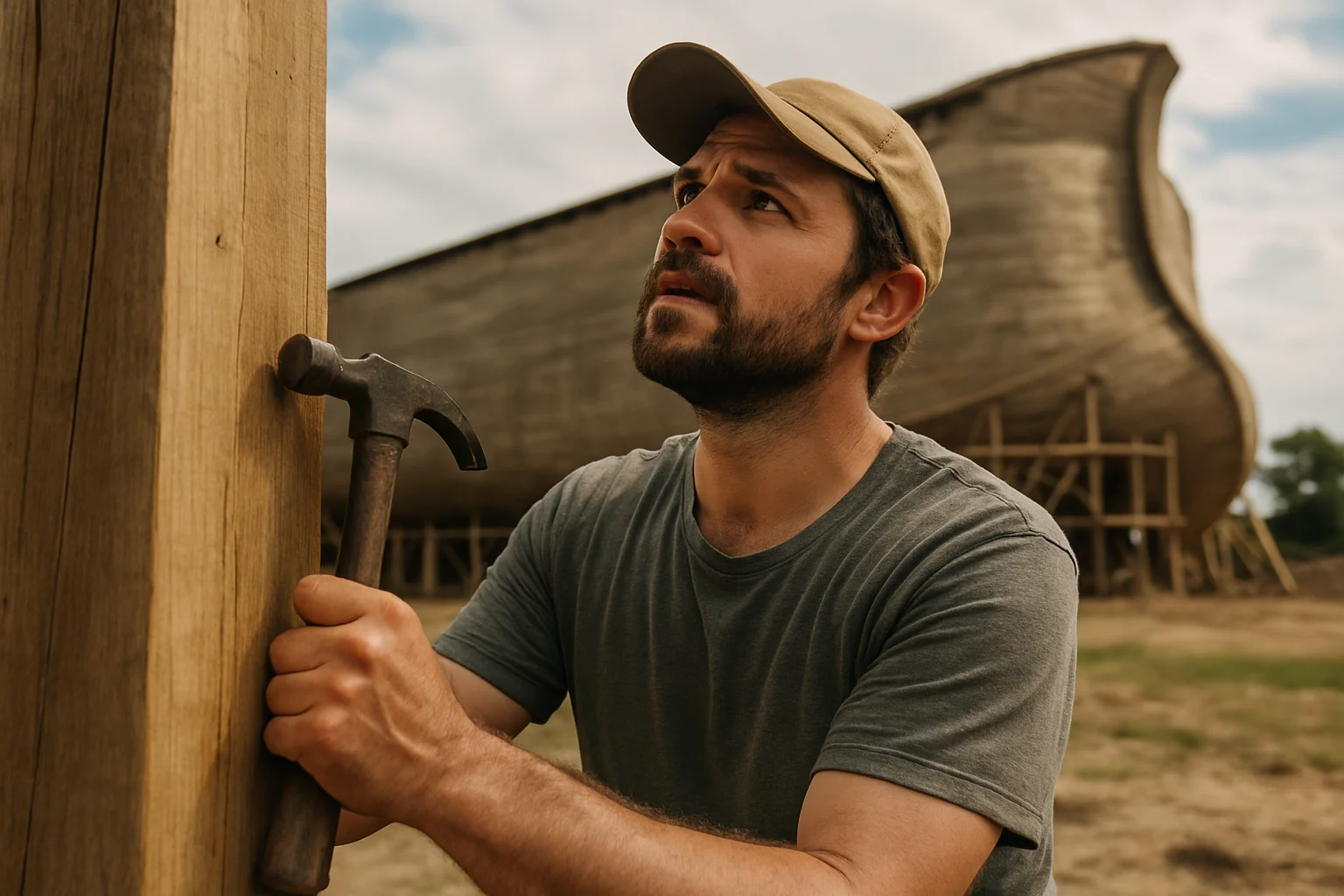
There, I’m sure, millions, billions of thoughts came over him. He just had to get away. And besides, he knew he was being pursued. And then he meets God in a burning bush. And then God starts by saying to him: “Moses, take off your shoes. You are standing on holy ground.” When Moses takes off his shoes, he also symbolically takes off his old life. He takes off everything the shoes have carried him through in his life. The flight from Egypt, which he ran in his shoes.

Just imagine a pair of shoes, how many things they’ve been through in a life. It’s no small thing, but Moses, he takes them off. And many times in our lives, you can have this, do I want to take my shoes off so God can see my feet underneath. So God can see if there are holey socks or smelly toes. Do I want to take my shoes off so I can stand completely before God, so He can begin to wash my feet? Do I give Him permission? Do I give Him permission to wash away the old so I can get a new identity in Him.

And the wild thing about it all is that when Moses does this, it’s only then that God begins to lead him. But not without trouble, because first Moses, of course, comes. Now he’s been out in the desert for 40 years. He’s joined a caravan. He’s married a woman from the bottom of society compared to where he came from. It was the top of the top in Egypt. But now it’s a shepherd. A shepherd has no education, nothing. He’s married to a shepherd girl. Like seriously.

So he stands before God. And God chooses him. Go, Moses. You shall free my people. We are in captivity. Well. No, I actually can’t speak very well because I can’t really articulate myself because I’ve been in the desert for so many years. And I don’t even know what to say. And then all the excuses begin. And often, when God calls us, all the excuses begin because we see a wrong identity. But God could see who Moses was. He saw him.

And God was so incredibly cunning, like really, really cunning. He says, fine, you can take Aaron with you. He has to get a scolding first, Moses, because he didn’t come now. It’s me who created you. It’s me who gave you the words. What are you doing, Moses? But it ends with Moses being allowed to take Aaron with him as a spokesperson to speak for him. But when you read through the whole story, it’s Moses who says most of it anyway. But God knew that Moses needed security. He needed a companion. He needed someone who could speak.

You need a companion. You need someone who can disciple you. You need to dare to take off your shoes, regardless of whether they smell or not. And then lay down your identity when God says, “I want to use you.” It doesn’t help to come up with all sorts of silly excuses. And see, it’s so interesting because the world tells us, you are worthless. That’s what the world wants to tell you. You are worthless. And then Satan comes and says, that’s right. You have no significance. Not even for God. You have no significance.

But Jesus says, you are my child, and I love you. I have given my life for you. What will you believe? The world, the Devil, or Jesus?

We see it in so many scenarios throughout life. I think many can, for example, struggle with a feeling of loneliness. And then you look up and fill yourself with all sorts of silly TV and see, everyone is just with someone all the time. And you feel, the more you see everyone else with others, the more you feel alone.

And the more you feel alone, the more the devil starts to come. Can you see, there’s a reason you’re alone. There’s a reason no one wants to be with you. You are abandoned. Not even God sees you. What? You’re completely crazy if you think anyone wants to be with you. And how could you think, if not even people want to be with you? How could your heavenly Father want to be with you? That’s how the devil talks.

But Jesus says, see, I am with you always, to the very end of the age. And it says, I will not leave you nor forsake you. We know that Jesus was forsaken on the cross by his Father. Why? To take the punishment you should have had, so you are never alone. Wow, it’s so wild when we look at how the world tries to indoctrinate us into a certain identity and see how the devil then comes and tries to really fan the flames, fan the lies, fan how we should accept it.

And he always comes. Can it really be true that you are loved by God? Is it really true that he created you? How many haven’t had the thought? If you think about what you’ve done in your past, wow, you are really unclean. You are filled with shame there. How can you believe that you can come before the living God? How can you believe anyone would want to be with you?

And then think, just when you came to faith, and you said you believed in Jesus, you went into that sin and that sin, and you fell there, and you fell there. Do you really believe you can call yourself clean before God, and you know that God only wants to be with those who are holy, and you call yourself holy. Believe me, there are really, really, really many who have had such things thrown in their face by the devil and become completely. Well, it’s true. I have indeed done many things. Oh man, I hadn’t thought about that. I actually thought, oh man, oh, now I don’t know what to do. And you can become completely thrown off.

But it says, if anyone is in Christ, he is a new creation. The old has passed away, and something new has come. Wow. The old has passed away, and something new has come. Yes, but some of it I did even though I believed in God, and I had just turned around, oh man, I’m just, I knew it was sin, and oh man, what should I do? If we confess our sins, he is faithful and just and will forgive us our sins and purify us from all unrighteousness, it says in 1 John 1:9. Wow.

So if he forgives you, how can you believe that you can continue to condemn yourself for what you’ve done? No, it’s called repentance. Just turn around. Turn away from what is wrong and praise God. Praise him. And rise in the new identity he has given you as his child.

There are so many promises throughout, and I will say, I won’t go through all of them because we won’t finish anytime soon. It could otherwise be very interesting to start, but there are so many promises in God’s word about who we are, how God sees us.

There are so many things. I would really recommend each and every one of you to try to go home, take your Bible, sit down, and simply try to do an identity study and find out, who am I really in him? Who am I in him?

And just to give a small example of how you can read it, now I will just try to read – this is actually from today’s Bible verse. It was just to take a small example and then say, okay, let’s just read the piece that actually belongs there. It’s from 2 Timothy 1:6-10. It says: “For this reason I remind you to fan into flame the gift of God, which is in you through the laying on of my hands. For the Spirit God gave us does not make us timid, but gives us power, love, and self-discipline. So do not be ashamed of the testimony about our Lord or of me his prisoner. Rather, join with me in suffering for the gospel, by the power of God. He has saved us and called us to a holy life—not because of anything we have done but because of his own purpose and grace. This grace was given us in Christ Jesus before the beginning of time, but it has now been revealed through the appearing of our Savior, Christ Jesus, who has destroyed death and has brought life and immortality to light through the gospel.”

And when you read that, you might think, wow, that was nice. What did it have to do with identity? So it was just a Bible verse. It was just okay. Let’s try to dissect it. Let’s try to see how we can actually read this based on what it really says about us.

Because suddenly, when you start reading it and diving into every single sentence and every little – wow, it becomes powerful. This is Paul writing the letter to Timothy. Timothy was a servant of God, so you can actually identify with him. It’s actually very modern to identify with all sorts of things. So you can safely identify with Timothy without anything happening. He was probably a really nice man.

So Paul writes: “For this reason I remind you to fan into flame the gift of God, which is in you through the laying on of my hands.” Okay. What do we have here? Each of you has received amounts of gifts from God. And some know it, some don’t. But some strive in here and have this, wow, I really want to, I really want to learn to prophesy, or I really want to just have more control over speaking in tongues, or I really want to heal the sick, or all these things that God has placed in us.

So try to dive into what God has really given you and what He has placed in you. Because when you’re filled with the Holy Spirit and baptized with the Holy Spirit, you’ve received God’s palette of spiritual gifts. It’s just about stepping out and starting to use them. And the more you use them, you’ll see how they just ignite. And God, He starts using you wildly.

So the gift you received when you came to faith and received the Holy Spirit, you have that inside you. The Holy Spirit lives inside you. So who are you if you don’t believe anything about yourself? If God’s living spirit resides in you. Wow. Hold on, man. Do you realize that the power that raised Jesus from the dead lives inside you?

But I’m not worth anything. What? Say that again, and then tell me afterward that the Holy Spirit lives inside you and that you are a temple for the living God. Instead, try to understand how valuable you are for the Holy Spirit to even want to dwell in you, give it a try.

It might be really, really boring, but try, even if it’s all boring, to dive into how they actually built the temple in the Old Testament in the Books of Moses. Try to dive into how precisely it’s described. There’s no “Oh, it’ll do.” No, if it’s not perfect as in perfect, as in over-perfect, then it’s torn down and started anew. It’s redone.

I think they didn’t redo things, maybe we’ve redone things here two or three times because we’re not that skilled, but down there, they redid it five, six, seven, eight times. And it wasn’t because they weren’t skilled. It was because they didn’t do it to perfection. It’s so wild when we read about how they built the temple.

You are a temple for the living God. You are a temple for the Holy Spirit. He lives in you with all the gifts that come with it. Wow. Hold on. It says, for God has not given us a spirit of fear, but a spirit of power and love and self-discipline. That spirit lives in you.

That means when people look at you, if you manage to lay down your old life and start accepting this, start integrating it as part of your identity, start thanking God for, it’s true, then something really starts happening with that power and love and… Therefore, do not be ashamed of the testimony about our Lord or of me, his prisoner, but join in suffering for the gospel by the power of God.

See, this is precisely about, if you start sharing the gospel, many might feel, oh, that wasn’t very cool because they just mocked me, or they didn’t listen, or I don’t see any fruits from it, or it completely threw me off, and it just wasn’t very fun. It says here. Therefore, do not be ashamed of the testimony about our Lord.

That means this isn’t about you at all. It’s not about whether you’re mocked or not. It’s about if you’re mocked, it’s probably because there’s enormous power in what you’re saying. And it provokes people. That means the spirit inside you spills out of your mouth and out of your eyes, and people can see it, and they become deeply provoked.

So instead of thinking, oh man, I think, yes, it worked. Thank you, Jesus. So that means the identity of being a failure disappears, and suddenly it becomes yes. That’s where we need to go. That’s the identity we need to have, that we can rejoice in persecution. Because we know when we’re persecuted, it’s because we’re seeking God, and we love God, and people can see it’s Him we serve.

Then it says further, he saved us. That means you are saved. You are saved from an eternity in flames. Wow. An eternity without God. But just try, try, try to resonate in that. Just try to… You are saved from eternal death to eternal life with your heavenly Father. And then you don’t think you’re valuable. Oh, man. There’s something we need to talk about here.

What, God? He’s so wild. And His love, it’s wow. And not only that, it says, he saved us and called us to a holy calling. That means he has called you and sees you as holy. He has called you with a holy calling. He wants you in holiness. He wants you made righteous.

It doesn’t say because of our works, but according to his own purpose. That means it’s a decision God has made. So because you said yes to Jesus, he has decided that you should be his child.

He has decided to call you into his presence. He has decided her or him. Come. It’s not something you can earn. It’s because you said yes to Jesus. And it’s his own purpose and the grace given to us in Christ Jesus before the beginning of time.

That grace, what does grace mean again? It means getting something you don’t deserve. So that means it has nothing to do with your merit at all, as in absolutely nothing, as in nada. It’s because you are created to be who you are, and because you said yes when Jesus called you. Therefore, I won’t go through this any further, but go home, go through it yourself or go through other passages in the Bible, and really try to read it with new eyes.

For you will see so many passages in the Bible where it actually speaks about you. It speaks about the disciples. It speaks about the church, it speaks about who we are, and what God has done for us. And again, it’s one of those things that runs through many, many people. They have this, well, it’s so nice, it says we should be holy, but I just don’t feel, I just don’t feel very holy, I just don’t like it.

And I’ve always been teased in school for being icy and holy, and now I have to be holy, and I just can’t figure it out anymore. And it’s completely terrible. And the devil really comes and says, that’s right. It’s completely terrible, and it’s completely impossible. You might as well not bother. There’s no point in seeking holiness because you’ll never achieve it.

God is so holy that a sinner can never be near Him. Never. Just don’t bother. Just don’t bother. Are you aware that many, many people never fully enter into service for God because it stops here, because they feel like a sinner their whole life. There are many denominations that preach that people are sinners, and they’ll never be anything else.

It’s also true, we are born sinners. Completely true. Because if we weren’t sinners, we couldn’t be forgiven for anything. And then there would be no reason for Jesus to die on the cross. But now he has died on the cross. And when we have accepted him, because he rose again.

When we have accepted Him and been baptized to belong to Him and received the Holy Spirit, we become a reborn Christian. This means we enter into the new generation. This means we are sanctified. We are sanctified. It says, you are holy in Christ Jesus. Called to be holy. It says this in First Corinthians 12. You are holy in Christ Jesus.

So, I think, I don’t really want to say much more, but I think we should just take a little time now, where we each try to reflect, in my identity, is there something standing in the way of who God says I am? Where is there something that prevents me from going all the way in? All the way in. Has my focus become about me? I need to achieve, I need to do, I want. Or has my focus become? It’s not about me at all.

It’s not about human recognition either. So many people. So, so many people. An enormous number of people have a void inside because they haven’t received their father’s recognition or their mother’s recognition. So many people, you can’t even imagine how many there are. But your heavenly Father, He recognizes you for who you are, not for what you do.

Yes, He appreciates when you walk for Him. He loves when you walk for Him. He wants you to walk for Him because you love Him, because you simply can’t help it.

But whether you walk or not, it doesn’t change the fact that you are justified through Him, and that He wants to be with you. The more you begin to grow in the trust of who He says you are, it will naturally come that you can’t help it. It will bubble out of your mouth. You can’t keep your mouth shut. You will tell people about Jesus, and you will tell people what He has done for you.

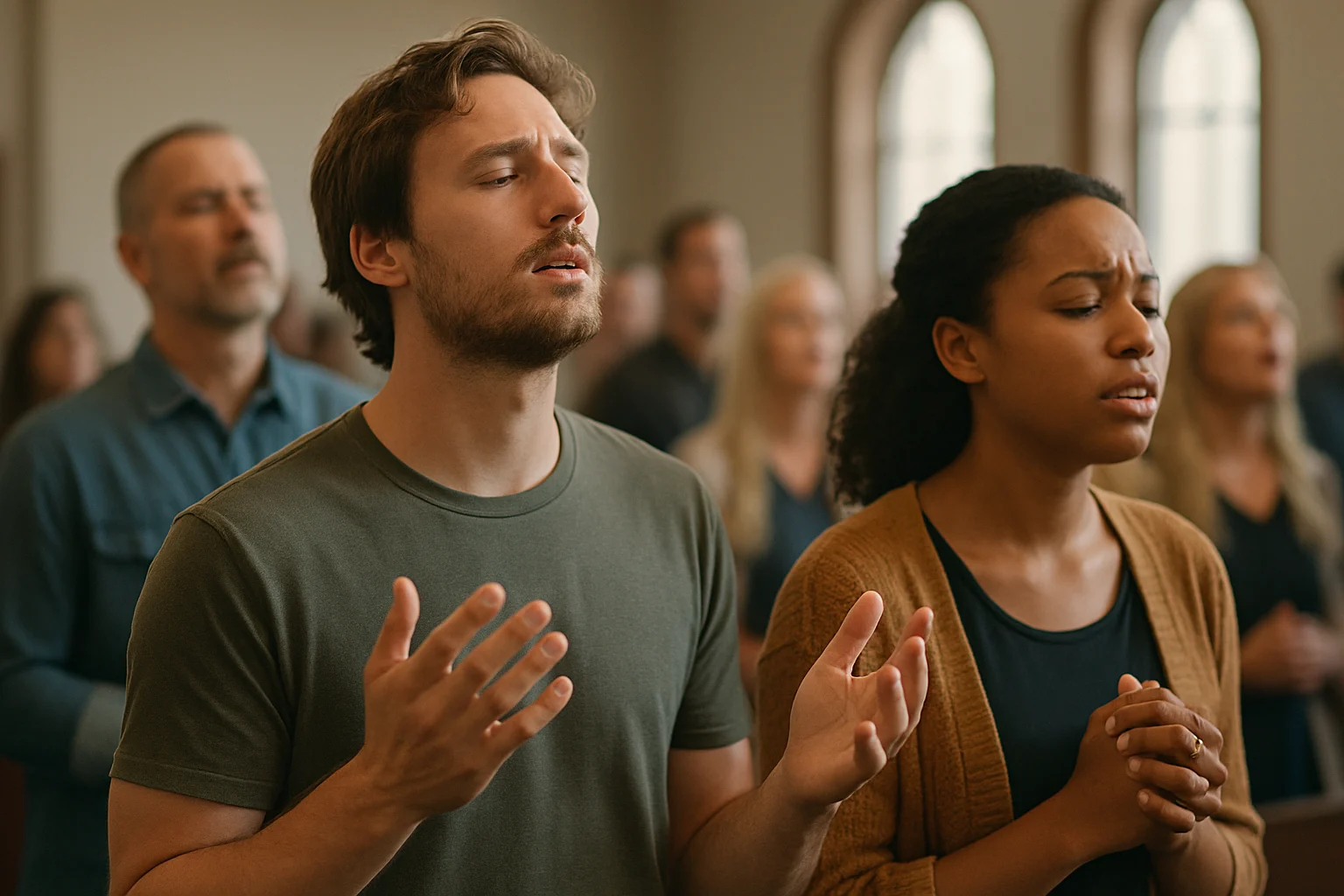
And it’s not about being able to speak and say all the fancy words, but it’s about being a light and a witness of what God has done in your life. That transforms, and it’s powerful. So let’s take a little time, where we just get a couple of minutes to just think through. Try or not think through, but take it with God. Say, “God, what is in my life that I need to put away?”

And then try to ask, also ask yourself, how do I really see myself? How do I see myself? Who am I? Am I a hunter, or am I a fishmonger, or am I a child of God? Where are you first and foremost? Or are you someone who is constantly hurt and frustrated and feels everyone is against you? Where are you?

So try to feel it out, and then make it right with your heavenly Father. Try to take the lie, if you know it’s a lie about what you are. Turn it 180 degrees around, because then you have God’s truth. And you know what sets free? The truth. Yes.

Close