

The teaching is based on the fact that, according to the Bible, we are a holy temple, and that this is described on three levels in the New Testament: the individual believer, the local community and the whole body of Christ worldwide. Among other passages, we read from 1 Corinthians chapter 6, verses 19–20, where Paul says: “Do you not know that your body is a temple of the Holy Spirit, who is in you, whom you have received from God? You do not belong to yourselves, for you were bought at a price. Therefore, honour God with your body!” Here, the emphasis is on the fact that we no longer belong to ourselves, because Jesus has redeemed us from the slavery of sin and the law with his blood, and that our body, soul and spirit now belong to God, full stop. The teacher’s name here explains how this means that the whole idea of ‘finding the best version of oneself’ falls flat, because the “best version” of ourselves died in baptism, and that life is now about Jesus living in us and through us.
It is explained that baptism is a burial of the old life, where we die to ourselves and our own will, and rise to a new life in Jesus. Therefore, the whole modern culture of self-development, where everything revolves around what I feel like doing and what feels good at the moment, is put into perspective in the light of the Gospel: who we are is, first and foremost, the person God has created to walk in His pre-ordained works. Instead of managing our daily lives according to gut feelings, moods and convenience, we are urged to ask: “God, use me. Send me where you want me to go. Let me do what You want me to do.” When we make our bodies available in this way, God also creates a new desire and joy within us to do His will, even when the flesh really just wants to go home to hot chocolate, buns and the sofa.
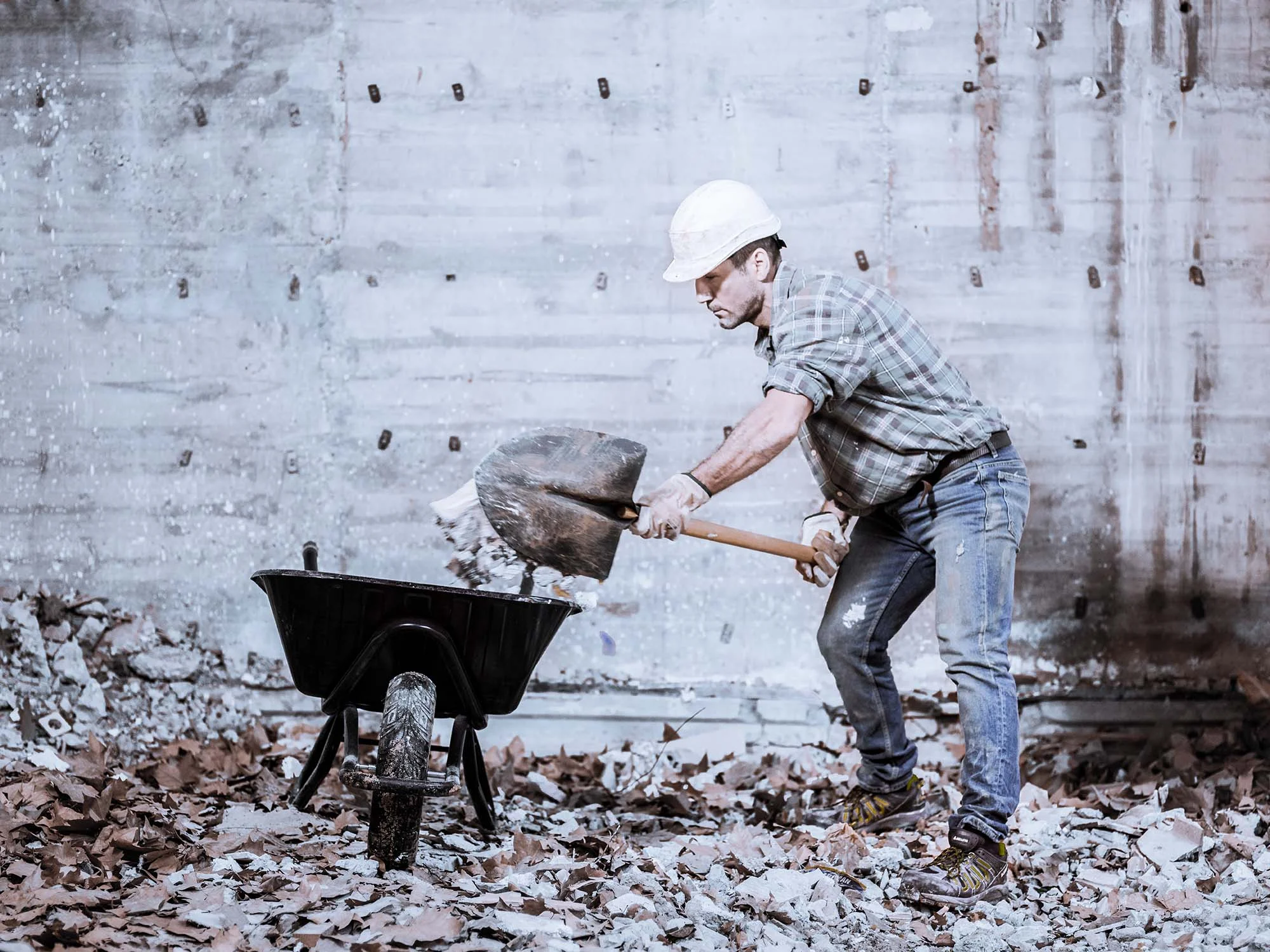
Practical experiences are shared showing that building for God in a concrete way can be hard, time-consuming and at times demotivating, such as when one has worked on a project for several years with few hands and many long days. Nevertheless, a deep inner longing is described to use one’s body and strength to build something that honours God and serves as a place where people can be reached, trained and equipped. The point is that a life as a temple for God comes at a cost – it is not about how we feel on any given day, but about obeying God’s call even when we do not feel like it. In return, it describes the immense joy and energy that follow when we act in obedience anyway, pray for people, bear witness to Jesus and see God at work, and how afterwards we can stand and exclaim: “Thank you God, how good you are.”
It is emphasised that because we are a temple of God, we must also look after our bodies in a healthy way. This concerns both the purely physical aspects: getting rest, not wearing oneself out completely, eating sensibly and not abusing one’s body; and the more moral and spiritual aspects such as sexuality, self-image and speech. Sexuality within marriage is described as something beautiful and created by God, which can be used for His glory, whilst sex outside marriage and self-prostitution are described as abusing something that belongs to God. It also discusses how harmful it is to constantly speak badly of oneself, devalue oneself and give free rein to negative thoughts.
From this comes a brief but clear clarification of the question many have: “If I am a temple of the Holy Spirit, can a demon even dwell within me?” The answer is yes, in the sense that human beings consist of spirit, soul and body. The spirit, into which the Holy Spirit moves when we are born again, can never be defiled or taken over by demons, but in the soul – our thoughts and mind – and in the body, there can certainly be demonic influence, especially if we make room for lies, self-hatred or open ourselves up to that which does not honour God. If negative thoughts are allowed to run unchecked, the body also begins to break down, because we start to believe the lie. The solution is to expose the darkness and cast it out, so that the Holy Spirit may shape both our thoughts and our bodies.
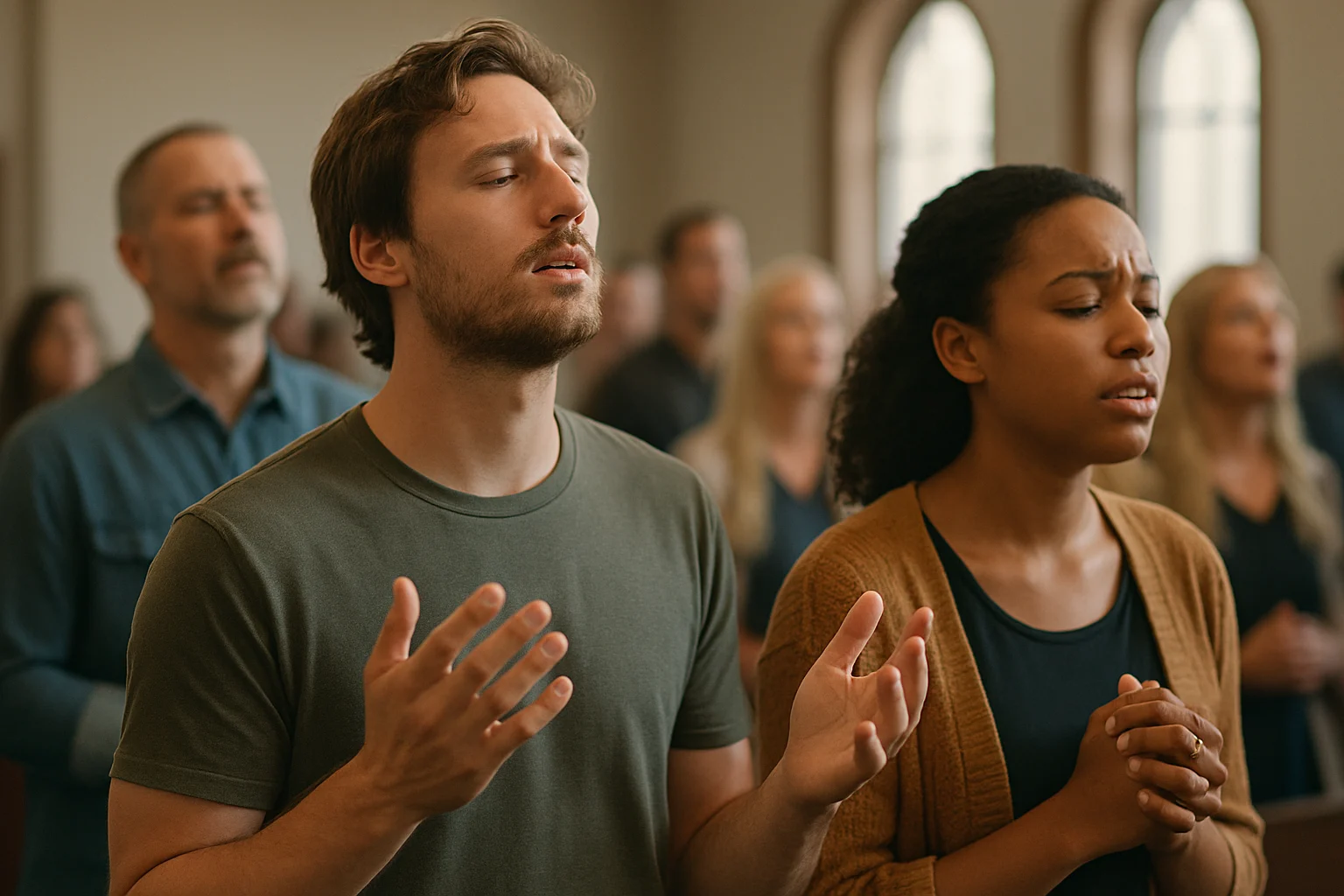
Following this personal perspective on the temple, the focus shifts to the second level: that the saints, together as a community, are a temple for God. A reading is taken from 1 Corinthians chapter 3, verses 16–17, which states: “Do you not know that you are God’s temple and that God’s Spirit dwells in you? If anyone destroys God’s temple, God will destroy him; for God’s temple is holy, and you are that temple.” Here it is emphasised that in this context the plural form is used, so that it refers to the congregation as a community. God sees his congregation as the apple of his eye, and there is a strong warning that whoever deliberately divides and destroys the community is setting themselves against God himself.
The community is praised as the place where we can love one another, bear with one another, weep and laugh together, pray together, share life, go out into the streets and tell people about Jesus, and where our witness can encourage others to go out and do the same. At the same time, a warning is issued against the attitude where one uses the phrase “I am a temple unto myself” to justify isolating oneself and shunning fellowship. If one wishes to be part of the greater temple, one must be in God’s church and actively participate in a Christian community. It is stated frankly that churches can be very different, and that there may be disagreements and “broken vessels”, but as long as there is love for Jesus and a sincere desire to lead people to Him, we are encouraged to honour and encourage one another rather than belittle and criticise.
The teaching uses several images to describe the importance of community: the body, where each part has its function; the anthill, where each ant works for the whole; and the bee colony, where each bee has a unique task, and where the whole system collapses if just one part fails. These images are used to pose questions such as: “Am I a living stone in the building, or do I just go about my own business?” and “Do I live for the community, or do I live only for myself?” The challenge is to be an “ant” or “bumblebee” for God’s kingdom, carrying more than it naturally ought to be able to, because the calling and love for Jesus drives it. When an ant is attacked, the other ants come to its aid, and this is contrasted with how easy it can be in practice for Christians simply to send a short message, rather than really stepping in and bearing the burden together when a brother or sister is struggling.
We then lift our gaze to the third level of the temple: the whole body of Christ on a global scale. We read from Ephesians chapter 2, verses 19–22, where it says, among other things, that we “are no longer strangers and foreigners, but fellow citizens with the saints and members of God’s household” and that we are “built on the foundation of the apostles and prophets, with Christ Jesus himself as the cornerstone”, and that “in him the whole building is joined together and rises to become a holy temple in the Lord. In him you too are being built together with us into a dwelling place for God in the Spirit.” This shows how all healthy Christian communities around the world are building blocks in one great, spiritual temple that God is in the process of building, and how it is not God’s plan for congregations to work against one another, but for each, in its own way, to lead people to Jesus.
The teaching returns several times to the point that we should not spend our energy speaking ill of other churches or Christians, but look at the fruit and rejoice when people are led to Jesus. If we strongly disagree with others, this should rather lead us to stand up, take action and build ourselves, rather than sitting passively and criticising. The teaching also highlights the danger of lukewarmness in congregations, where too many sit quietly whilst a few try to carry the whole burden, and dreams of seeing a ‘hive’ of believers, all moving for Jesus. A vibrant community is described as a place where one helps up those who have fallen or are weary, so that the whole body can be in motion.
Finally, the image of the temple is linked to the Old Testament descriptions of the tabernacle and the temple, where God revealed Himself as a God with an eye for detail. Reference is made, amongst other things, to Exodus chapter 25 concerning the tabernacle and 1 Kings, where the temple is described with very detailed instructions regarding measurements, materials, precious stones, gold and silver. God did not take the easy way out, but specified everything down to the smallest detail, and this is used as an illustration that God also cares about the details of our lives and the life of the congregation. We are encouraged to let God build the temple within us using good materials, not ‘cheap building materials’ that only last a short time, but quality materials that protect the house in the long term, just as when one chooses a more expensive paint or a better type of wood because one wants to look after one’s house well.
There is talk of the necessity of maintenance: just as a physical house needs its drains cleared, its windows cleaned and repairs carried out, so too must we allow God to cleanse us of sin, bad habits, skewed perspectives and everything that threatens to break down the temple. The image is brought right down to the everyday level, where we are urged to guard the ‘courtyard’ – our sensory gateways: eyes, ears and mouth – so that we do not fill ourselves with rubbish, impure things, lies and entertainment that draw us away from God. Just as Jesus cleansed the temple and drove out the money-changers and merchants with a whip, we are challenged to take up the image of the whip and let everything that defiles us be driven out of our lives, so that there is once again room for wholeness, focus and purity.
The teaching concludes by bringing together the three levels: your own life as the Holy of Holies, where God’s Spirit dwells; your local congregation as the holy place where you gather, honour God, worship and pray; and the whole worldwide church as the outer court, the whole body, to which all true believers belong. God desires that you yourself be a temple for Him, that you together as a local community be a temple for Him, and that His entire church on earth function as a cohesive building of living stones. The question that remains is how you choose to build and maintain the temple God has entrusted to you, and which ‘building materials’ you will use in daily life: the cheap solutions, the compromises and half-measures, or the costly obedience, where it comes at a price, but where the house can in turn stand strong, honour God and be a place where people meet Jesus.
Quote from the teaching: It is no use saying that you are a temple for God if you do not let Him cleanse, build and use that temple in your daily life.
Relevant keywords: holy temple – God’s temple – the Holy Spirit within us – living sacrifice – obedience to God – Christian fellowship – the body of Christ – spirit, soul and body – spiritual maintenance – holiness in daily life – spiritual warfare – church life – God’s calling – following Jesus – living stones – the tabernacle – biblical teaching – spiritual growth