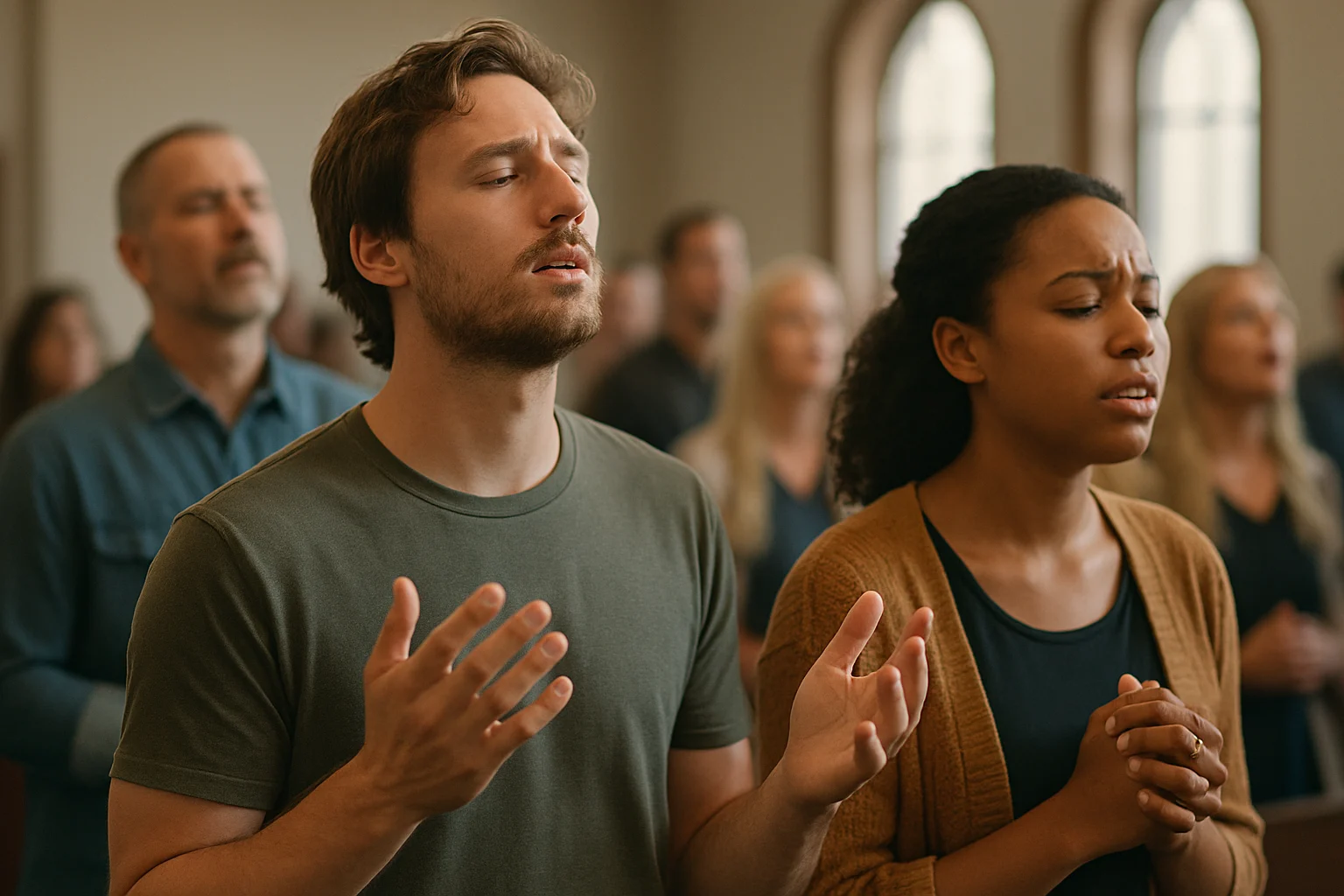


God’s peace is not something superficial that comes and goes with one’s mood, but something deep, secure and real that He wants to place within a person’s life. Yet many believers go about without that peace, even though they believe in Jesus, have been baptised and want to live with God. How is it possible to belong to God and still be filled with anxiety, fear, shame and inner tension? Andreas Slot-Henriksen explains here how God’s peace is stolen by fear, shame, control and a lack of trust, and how to find your way back to the peace that does not come from the world. Peace is described here using the biblical word shalom, which is not just about tranquillity, but also about wholeness, well-being, protection and a sense of everything being in its rightful place.
When speaking of peace, it is made clear that God does not merely want us to survive the day, but to live with a heart that has found rest in Him. The problem is simply that there is much that can steal that peace. Fear is one of the greatest thieves, because it causes our thoughts to run ahead of us and paint pictures of everything that might go wrong tomorrow, next week or further down the line. Worries about the world, the economy, the future, war and uncertainty can take up so much space that there is simply no room left for God’s peace. When you keep living in that sort of inner state of alert, the unease becomes almost normal, even though it was never meant to be your home.
Another major theme is shame. Many people may have made peace with God and yet still carry around memories of old mistakes, old words and old actions that still linger in their minds. You may well know in your head that there is forgiveness, but your heart still tightens up, as if the matter is still unresolved. That is why it is emphasised that shame does not just make one feel sad, but also breeds fear, distance and unease. As long as shame is allowed to rule, it becomes difficult to receive the peace that God actually already wants to give.
A down-to-earth image is used of a child who has broken a window and does not dare to say so out loud. The point is that guilt and shame cause a person to hide, even when forgiveness is actually waiting right in front of them. In the same way, one might believe that God is ready with harsh words, whilst in reality He wants us to come out into the light and settle the matter. It is therefore said that confessing what one has done is not the path into more fear, but the path out of it. When what is hidden comes to light, it loses its grip, and then peace begins to take hold once more.
The teaching also touches on the human need for control. Many people feel most at ease when they can keep track of things themselves, steer the course and know what the next step will look like. But when control slips away, it quickly becomes apparent how much peace may have been built on one’s own efforts rather than on trust in God. That is why it is stated very clearly that where peace is lacking, there is often a place where trust in God is also lacking. Peace does not grow from everything going according to plan, but from remaining steadfast with God, even when the plan does not yet make sense.
A key theme in the teaching is that Jesus does not give peace in the way the world gives it. The world often promises peace if only circumstances fall into place, if money is available, if the body is functioning, if relationships are stable, and if the future looks secure. But that sort of peace lasts only as long as things do. God’s peace is different, because it can be present amidst pressure, opposition and uncertainty. That is why peace is not described as the absence of problems, but as being with Jesus in the midst of them.
It is also mentioned that many people end up making the Christian life very inward-looking. One can spend a long time filling oneself with teaching, videos, notes, prayer and good thoughts, and yet be left without the peace one longs for. In the teaching, this is illustrated through a longer story about a woman who constantly thinks that she must first feel completely at peace within herself before she can serve others. But this changes when she begins to act on what she already knows, giving of herself in small, simple ways such as visits, help, encouragement and time for others. Here it becomes very clear that peace does not just grow when one takes in, but also when one begins to give out.
It is therefore emphasised that one must not merely hold on to God’s word in one’s mind, but also live by it in everyday life. Faith is not just something one feels, but something one chooses to act upon, even when one’s feelings lag behind. When God has spoken, the next step is not to wait for the perfect mood, but to obey. This applies to both the small things and the big ones. Those who continue to act on God’s word discover, little by little, that peace grows stronger than fear.
The teaching also emphasises that the enemy tries to steal peace time and time again. This can happen through thoughts of not being good enough, through conflicts, through disappointments, through confusion about answers to prayer, or through the feeling of being left to one’s own devices. That is why we are called to ensure that the peace of Christ does not merely visit the heart from time to time, but is allowed to reign there. Peace must be the one who judges, chooses the direction and sets the tone, not fear, not shame and not the old patterns. It is an active choice, where time and again one casts aside one’s worries and holds fast to the fact that God is faithful.
Ultimately, it all comes together in a simple yet powerful image: when our gaze shifts from ourselves to God and to other people, things begin to fall into place. When we stop constantly revolving around how we ourselves are feeling, and instead begin to love, serve, give and trust, peace often comes quietly and gently. It does not always come as a great emotional outburst, but as a steady stream that fills us more and more. That peace does not make the world any less chaotic, but it means that the heart no longer needs to be in chaos along with the world. That is why the teaching concludes with a clear call to allow the peace of Christ to dwell, rule and spread within the heart, so that it may also rub off on others.
Quote from the teaching: “Peace is not the absence of problems, but peace is the presence of Jesus.”
Relevant keywords: God’s peace – shalom – inner peace – fear – worries – shame – trust in God – the peace of Christ – the fruit of the Spirit – the Holy Spirit – rest in God – service – discipleship – Christian life – peace in the heart – spiritual peace