God, Jesus & the Holy Spirit

Read the full content of the teaching 'Your rod and your staff, they comfort me. (Psalm 23)'

Please note that there may be deviations and errors, as the text below has been transcribed and adjusted automatically.

I’m just going to start by reading Psalm 23 because it’s truly an amazing psalm, really. But it’s kind of strange, this thing about the rod and the staff being a comfort, but we’ll get back to that. Here it is, from the Book of Psalms, chapter 23, and it’s only six verses, so it’s one of the ultra-short psalms. Unfortunately, it could have been much, much longer because it’s really good.

A Psalm of David: The Lord is my shepherd; I lack nothing. He makes me lie down in green pastures, he leads me beside quiet waters. He refreshes my soul, he guides me along the right paths for his name’s sake. Even though I walk through the darkest valley, I will fear no evil, for you are with me. Your rod and your staff, they comfort me. You prepare a table before me in the presence of my enemies. You anoint my head with oil; my cup overflows. Surely your goodness and love will follow me all the days of my life, and I will dwell in the house of the Lord forever.

See, instead of starting at verse four with your rod and your staff comforting me, I think we need to start somewhere completely different, namely from the beginning. If we read the very first verse, it says: The Lord is my shepherd; I lack nothing. That means, right from the start, we have here that it’s actually about God being our shepherd.

If we look all the way through the Bible, we’ll find many, many places where God refers to himself as a shepherd. In fact, if we look at what Jesus says about it, he actually says in Matthew 15 that he is sent to the lost sheep of Israel. And this is actually quite special because it comes, let me just try to read it from chapter 15, verse 21.

Jesus left there and withdrew to the region of Tyre and Sidon. A Canaanite woman from that vicinity came to him, crying out, “Lord, Son of David, have mercy on me! My daughter is demon-possessed and suffering terribly.” Jesus did not answer a word. So his disciples came to him and urged him, “Send her away, for she keeps crying out after us.” He answered, “I was sent only to the lost sheep of Israel.” The woman came and knelt before him. “Lord, help me!” she said. He replied, “It is not right to take the children’s bread and toss it to the dogs.” “Yes it is, Lord,” she said. “Even the dogs eat the crumbs that fall from their master’s table.” Then Jesus said to her, “Woman, you have great faith! Your request is granted.” And her daughter was healed at that moment.

Wow. But Jesus is really tough here and actually refuses to help her at first because initially, he is sent out to the Jewish people. And the Jewish people, God’s chosen people, he refers to here as the lost sheep. And in the Old Testament, this is confirmed again, for example, in the Book of Psalms, chapter 95, verses 6 to 7, it says: Come, let us bow down in worship, let us kneel before the Lord our Maker; for he is our God and we are the people of his pasture, the flock under his care. If only you would hear his voice today.

We can read in many places throughout both the Old Testament and the New Testament how Jesus or God is referred to as a shepherd, and we are referred to as sheep. That’s why it starts, Jesus actually starts or ends in the middle, whatever, he says: I am the good shepherd. He talks a lot about sheep. I mean, if you didn’t know who he was, sometimes you’d think he must have a farm because he sure talks a lot about sheep. But he did that because he used examples from everyday life, and down there, the sheep were all around.

The shepherds were in the fields, the shepherds were all around. It’s not like in Denmark, where everything is enclosed in fences, but the shepherds were all around.

With their livestock, and Jesus picks up in the Gospel of John, chapter 10. Jesus says: Very truly I tell you Pharisees, anyone who does not enter the sheep pen by the gate, but climbs in by some other way, is a thief and a robber. The one who enters by the gate is the shepherd of the sheep. The gatekeeper opens the gate for him, and the sheep listen to his voice. He calls his own sheep by name and leads them out.

When he has brought out all his own, he goes on ahead of them, and his sheep follow him because they know his voice. But they will never follow a stranger; in fact, they will run away from him because they do not recognize a stranger’s voice. Jesus used this figure of speech, but the Pharisees did not understand what he was telling them.

Therefore Jesus said again, “Very truly I tell you, I am the gate for the sheep. All who have come before me are thieves and robbers, but the sheep have not listened to them. I am the gate; whoever enters through me will be saved. They will come in and go out, and find pasture. The thief comes only to steal and kill and destroy; I have come that they may have life, and have it to the full.

I am the good shepherd. The good shepherd lays down his life for the sheep. The hired hand is not the shepherd and does not own the sheep. So when he sees the wolf coming, he abandons the sheep and runs away. Then the wolf attacks the flock and scatters it. The man runs away because he is a hired hand and cares nothing for the sheep. I am the good shepherd; I know my sheep and my sheep know me— just as the Father knows me and I know the Father—and I lay down my life for the sheep.

I have other sheep that are not of this sheep pen. I must bring them also. They too will listen to my voice, and there shall be one flock and one shepherd. And a little later, Jesus says to them: But you do not believe because you are not my sheep. And it’s funny because here Jesus changes everything. Here he is not only coming for the sheep of Israel’s house, but here he has come for a flock of sheep that do not belong to this pen.

He’s standing there talking to the Jews, and he’s standing there rebuking them because they don’t believe in him, and that’s why he says: But you do not believe because you are not my sheep. So suddenly, we are all let in now, we get to be sheep. And a sheep is not a dumb woolly animal, but a sheep is actually incredibly intelligent. A sheep knows exactly what it needs to do. A sheep knows its shepherd, knows its master, and only obeys his voice.

I don’t know if you’ve seen documentaries about sheep, where another person, who almost has the same voice as the shepherd, can stand up and say exactly the same command in the same tone, and the sheep are completely indifferent, completely. But if the real shepherd comes and says exactly the same command, then the sheep obey. And that’s where we need to learn to discern. That’s where we really need to understand that we should only obey his voice.

We shouldn’t follow the Devil’s voice because, as it says in this passage, the thief only comes to steal and kill and destroy, and he doesn’t enter through the gate, he climbs over wherever he can. He is a wolf in sheep’s clothing. Why am I talking about all this with shepherds when we’re supposed to talk about the rod and the staff? We need to because the shepherd always had a rod with him, and he always had a staff with him.

And many don’t know the difference because in our culture, it’s a bit like: Well, a rod and a staff, they’re kind of similar, right? One you can walk with, and the other is a bit taller, and you can walk with that too. But that’s not quite how it works. If we look at the rod, it was about a meter long, something the shepherd always had with him. He used it when wolves, bears, or wild animals came around. It was the rod he used to fend them off. Skilled shepherds learned to throw their rod and hit their target, and they could fight off many animals just using this rod.

The staff, on the other hand, is a tall stick with a loop at the end. It’s a bit like a caricature of a bishop’s staff, if you’ve seen one of those. The reason it was tall and had a loop was that the staff was used to save the sheep. If a sheep got caught in a thorn bush or fell into a crevice, sometimes there were cracks in the rocks where the sheep would fall in, and you couldn’t reach them yourself. But you could extend the staff and hook the sheep to pull it up. You could grab the sheep and pull it out of the thorn bush. So, the staff is for saving the sheep, for leading, whereas the rod was really for fighting off wild animals.

These two things are incredibly important for a shepherd, and that’s why it makes sense when it says, “Your rod and your staff comfort me.” It means we know when He is our shepherd and when we are His sheep, we know He goes before us. We know that when we truly trust Him, we let Him use the rod. But very, very often, we Christians are the kind who think: wow, there’s an attack, the wolf is coming, I have to fight because I’m a sheep, and then you go after the wolf and get bitten.

That’s not what Jesus has called us to. Jesus has called you to be a sheep under the shepherd, which means when you are under the shepherd, you let the shepherd be the one who protects you. Of course, if there’s a demon that’s jumped in, it should be cast out, that’s how it is, but that’s really it. You shouldn’t go on the offensive against Satan. You should learn to recognize your shepherd’s voice. You should learn to recognize your Father’s voice.

You should know that if you go astray, He leaves the other 99 in the fold and goes out to find you because He loves you, because He has His staff, because He has His rod, and because He is amazing. And see, something really interesting is if we look at David. David and Goliath, you know the story. David was a shepherd and was chosen to be king. He was anointed to be king, but he was this little ruddy boy who was nothing more than a shepherd.

Many of us know, well, David, he defeated Goliath, and the only weapon he had with him, what was it? It was a sling, but that’s actually not true. Let me read from 1 Samuel 17:32-37, and then we’ll skip to verse 43. David said to Saul: Lord, don’t lose heart because of this Philistine. I’m going to fight him. But Saul said to David: You can’t go against this Philistine and fight him, for you are just a boy, and he has been a warrior since his youth.

But David replied: Lord, I have been a shepherd for my father. When a lion or a bear came and took a sheep from the flock, I went after it, struck it, and rescued the sheep from its mouth. If it turned on me, I seized it by its mane and killed it. I have killed both lions and bears. This uncircumcised Philistine will be like one of them because he has defied the armies of the living God. And David said: The Lord who rescued me from the paw of the lion and the paw of the bear will rescue me from the hand of this Philistine. Saul said to David: Go, and the Lord be with you.

And then in verse 43: The Philistine said to David: Am I a dog, that you come at me with sticks? And the Philistine cursed David by his gods. He, David, went into battle, but he didn’t go without his staff.

The staff is a symbol of God’s guidance, of God’s direction. It’s the guide that the sheep follow. The staff is not for striking; that’s what the rod is for. But David went to war with his staff. He trusted God because the staff was his comfort, as we read in the psalm earlier. He trusted God, so he took off his physical armor before the battle and went into battle with the comfort that God was his staff. And then he used his sling in faith, believing that a small, insignificant stone, used correctly, could overcome the enemy’s power, and he won. And the uncircumcised Philistine fell and had his head cut off.

The staff is also something else. If we look back through the books of Moses, we’ll find out how Moses used his staff to perform the mightiest miracles and wonders. Just to give a few examples: Exodus 7:9, when Pharaoh says to you to perform a miracle, you shall say to Aaron: Take your staff and throw it down before Pharaoh, and it will become a snake. Exodus 7:17: This is what the Lord says: By this, you will know that I am the Lord. With the staff that is in my hand, I will strike the water of the Nile, and it will be changed into blood. The fish in the Nile will die, and the Nile will stink; the Egyptians will not be able to drink its water.

Exodus 8:1: The Lord said to Moses: Tell Aaron to stretch out his hand with the staff over the streams, canals, and ponds, and make frogs come up on the land of Egypt. Exodus 8:13: They did this, and Aaron stretched out his hand with the staff and struck the dust of the ground, and gnats came on people and animals. All the dust throughout the land of Egypt became gnats. Exodus 14:16: Raise your staff and stretch out your hand over the sea to divide the water so that the Israelites can go through the sea on dry ground.

So we know there is power in the staff that Moses received, that Aaron received. It’s God’s staff. Is it God’s staff? It doesn’t make sense. Yes! Because if we skip to Numbers, now it gets good. The Lord—or the whole Bible is, of course, good, so it’s not just… Anyway, the Lord spoke to Moses and said: Speak to the Israelites and get a staff from each ancestral tribe, twelve staffs in all, from each leader of their ancestral tribes. Write each man’s name on his staff. Write Aaron’s name on the staff of Levi, for there must be one staff for the head of each ancestral tribe.

You shall place them in the tent of meeting in front of the testimony, where I reveal myself to you. The staff belonging to the man I choose will sprout, and I will make the Israelites stop grumbling against you, so I won’t have to hear it anymore. Moses told this to the Israelites, and all their leaders gave him a staff, one for each leader of their ancestral houses, twelve staffs in all. Aaron’s staff was among them. Moses placed the staffs before the Lord in the tent of the testimony.

The next day, when Moses entered the tent of the testimony, Aaron’s staff, representing the house of Levi, had sprouted. It had not only sprouted but also blossomed and produced ripe almonds. Wow! Isn’t it interesting? The tribe of Levi, Aaron, was the holy priesthood chosen by God. It was the staff from that tribe that began to blossom. And not only did it blossom, but it also bore almonds. And the amazing thing is, if you look at the symbolism: What is an almond? What does an almond symbolize? You can look it up online. It symbolizes purity, virginity, fertility, and the female reproductive organ. Everything points to Jesus being born of a virgin, who is pure because he is the holy priesthood.

It’s incredible when we start diving into the symbolism here. And he is the shepherd with this staff. He was the one who was born, and

The amazing thing, just to take it a step further, what is said about Jesus? How is it prophesied about him? Isaiah 53:1: Who has believed our message? And to whom has the arm of the Lord been revealed? He grew up before the Lord like a tender shoot, like a root out of dry ground. He had no beauty or majesty to attract us to him. We saw him, but we didn’t care for the sight. It points to Jesus. The staff that blossomed, the almond, it all points to him, who was the Shoot. The staff leads, the staff guides, the staff shows the right way, the staff is in God’s hand, the staff is your comfort, and with his rod, he defends you, so you don’t have to do it anymore.

And it’s so amazing when we read Psalm 23. When we read through it: The Lord is my shepherd, I lack nothing, we’ve talked about that. It says: He makes me lie down in green pastures, he leads me beside quiet waters. What does Jesus say? What does he say about himself? He says in Matthew 11:28: Come to me, all you who are weary and burdened, and I will give you rest. Take my yoke upon you and learn from me, for I am gentle and humble in heart. You will find rest for your souls, for my yoke is easy and my burden is light.

So here we have it, we find rest in Jesus, but we don’t just find rest. For it says: He makes me lie down in green pastures, that is, this rest, and he leads me beside quiet waters. Okay, Jesus says about himself in John 4, verse 14, or sorry, from verse 10 to 14. Jesus answered her, it’s the woman at the well: If you knew the gift of God and who it is that asks you for a drink, you would have asked him, and he would have given you living water. The woman said to him: Sir, you have nothing to draw with, and the well is deep. Where can you get this living water? Are you greater than our father Jacob, who gave us the well and drank from it himself, as did his sons and his livestock? Jesus answered her: Everyone who drinks this water will be thirsty again, but whoever drinks the water I give them will never thirst. Indeed, the water I give them will become in them a spring of water welling up to eternal life.

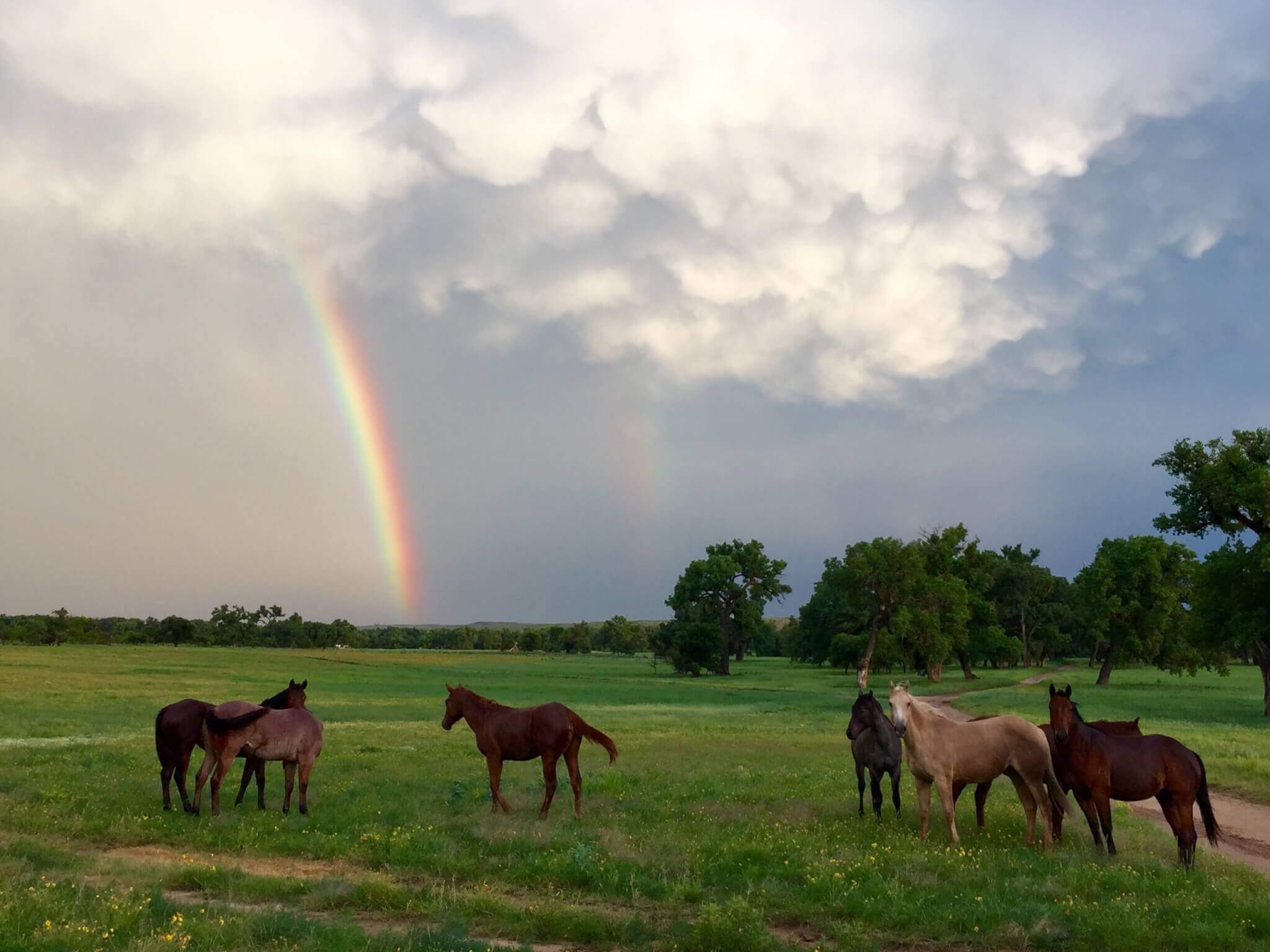
Wow. Just imagine being led to the quiet waters. That’s our Father in heaven. He is the peace in your life. He is the quiet water. Have you ever sat and looked out over a lake, a forest lake, just feeling the peace? That’s just a fraction of who our heavenly Father is because the forest lake is a creation he made, a creation, but he gives the true peace for the soul, it said.

Then it continues in verse three: He restores my soul, he guides me along the right paths for his name’s sake. He restores my soul. It’s a strange thing, David says: He restores my soul. Was he tired? But what does Jesus say? He says to the disciples: But you will receive power when the Holy Spirit comes on you, and you will be my witnesses in Jerusalem, and in all Judea and Samaria, and to the ends of the earth. We receive power through God’s spirit. It’s absolutely amazing.

For what happens when we receive the Holy Spirit? We get this amazing fruit of the Spirit from Galatians 5:22: love, joy, peace, patience, kindness, goodness, faithfulness, gentleness, and self-control. What does it give? It suddenly makes you whole inside. It suddenly makes all that weighs you down disappear. It suddenly gives you new strength from him because it’s the fruit of the Spirit that begins to unfold in your life.

Why do you experience discouragement? Why do you experience sadness? What’s happening? Because the devil tries to take a bite of the fruit you’ve received from the Holy Spirit. He tries to take it from you. Why? Give him permission? Why not?

Take nine bites of the apple, or whatever fruit it is, so you get them all. Jesus himself says: I am the way and the truth and the life. No one comes to the Father except through me. When he is both the way, the truth, and the life, how can we not experience the rest, the strength, the peace he gives?

In this translation, it says in verse 4: Even though I walk through the darkest valley. But if you look at the darkest valley, it actually says the valley of the shadow of death. It means, are you out there where things aren’t fun anymore, where death lurks just around the corner, it says: I will fear no evil, for you are with me. Your rod and your staff, they comfort me. And that’s where it’s important to understand what the rod and the staff mean. It’s when you’re doing well, but it’s also when you’re at your lowest.

I think I’ve shared the testimony with a few of you, but we had… Now I’ll share it again anyway. At one point, we had a friend who really loved Jesus a lot. He was a very busy man, and in many ways, he did what he was supposed to, he went out and prayed for people, he experienced the wildest miracles. If you’ve heard me tell the testimony about a man who broke his back on the construction site, he got, I think, if I remember correctly, with the risk of being wrong, he got a concrete block over him and broke his back on the construction site.

They all wanted to call an ambulance and so on. But he just said, “Don’t do it, don’t do it.” And he simply crawled into his trailer in severe, severe pain. He couldn’t bear it; he was in so much pain, and he knew very well that his back was broken. But God had said something else, so he sat in there for an hour and a half, praising Jesus in tongues. And then he went out and worked afterward. Because God is good when we truly understand what it means to have a Father who takes care of us.

The problem was that this same man experienced being really, really busy, very busy, and that meant there were many things in his life he didn’t have time for, including God. At one point, he got cancer, and it actually ended with him dying. I remember he said to me before: “It’s so strange, I can’t pray anymore. It’s like it’s been taken from me, not by God, but Satan tried to steal from him.”

The amazing part, for those of you who haven’t heard the story, is that just before he died, the family was gathered, and he was on his deathbed. Suddenly, he got up and said, “I need to do something.” He was a carpenter. So he went in and called a customer and said, “Sorry, I can’t fulfill the order we agreed on because I’m going to die this afternoon. Bye-bye.” And then he hung up. He lay back in his bed, and the family stood around the bed. Suddenly, he just started to shine and smile, looked up, and said, “Look, they’ve set the table for me.” And then he died.

But Satan tried to steal something from him, but Satan could never take his soul. So we need to know God’s promises when we suddenly find ourselves in a situation where life is tough, where maybe illness strikes, that it’s not the illness we look at, but God’s promises. That we understand what the staff is, we understand what the rod is, we understand who Jesus Christ is, and hold on to that firmly, instead of, well, the doctors say: Stop now, stop now. Your doctor might be nice, but God knows the truth, and Jesus is the way, the truth, and the life, and he desires…

Really, really, really fellowship with you. He wants you to seek him before you seek your doctor. He wants you to seek him before you seek a psychologist. He wants you to seek him first in all respects, and sometimes we forget that, especially if Jesus isn’t in first place, and he should be.

For Jesus said in Matthew 28, he says: Go and make disciples of all nations, baptizing them in the name of the Father, the Son, and the Holy Spirit, and teaching them to observe all that I have commanded you. And then he says: And behold, I am with you always, to the end of the age. I am with you always, to the end of the age. There isn’t a single day – all days. He doesn’t open the calendar and say: See, I’m with you in week 35, 37, 39, and 42. I am with you always, to the end of the age. He never says: I don’t have time for you. He says: Come, my child, I want to spend time with you.

And Paul, he got it. He writes in Romans 8, he writes: But in all these things we are more than conquerors through him who loved us. For I am convinced that neither death nor life, nor angels nor rulers, nor things present nor things to come, nor powers, nor height nor depth, nor anything else in all creation, will be able to separate us from the love of God in Christ Jesus our Lord.

In verse five from the good psalm, it says: You prepare a table before me in the presence of my enemies, you anoint my head with oil, my cup overflows. What was the testimony with the man who died? The table is set. He literally sets the table for you and has fellowship with you. The day we are no longer here, we come home to him, because he wants you if you want him. But if you don’t want him, you won’t get in.

And it’s not enough to seek your Christianity through other people. Think: Wow, that guy or that girl, they have amazing gifts from God. Oh, I need to seek healing, or I need to seek their spiritual gifts, or sorry, that’s nonsense. It’s through Jesus Christ. You shouldn’t seek your freedom through people. You should seek your freedom through Jesus. He’s the one who did it. He’s our redeemer.

There are so many cycling around. I don’t know if you know the term impartation. There are so many who want: “Oh, that preacher there, he has a wild gift from God. I need to go over if he can pray for me and lay hands on me so I can get an impartation and receive this gift.” It’s demonic. Sorry, it’s demonic. The only thing we can receive through laying on of hands is healing, deliverance, it’s God who gives a gift. It’s not people.

You should seek your freedom through Jesus. You should seek what he has for you, not what people can give you, because it’s a lie. The devil wants your focus to be on people instead of your focus being on the shepherd. And that’s why you need to learn his voice. That’s why you need to be in God’s assembly. You need to learn who Jesus is. You need to learn how deeply loved you are.

And that’s why David ends by saying: Surely goodness and mercy shall follow me all the days of my life, and I shall dwell in the house of the Lord forever. He had understood that Jesus went away to prepare a place for us. I want to go home to Jesus the day I die, and I want every one of you with me.

Therefore, you must never put people on a pedestal, neither me nor anyone else. It should never be: Well, I do it because Andreas says. No, stop that. You do it because Jesus says, otherwise, you don’t do it. You must never put people on a pedestal. You should put Jesus where he belongs, as your God, as your creator, as your sovereign. He does it, and it’s necessary.

When he does it, do you realize how many thorns and spikes and all sorts of debris can get stuck in such a fleece? When he shears you, it’s to take care of you, to protect you, and you need to let yourself be sheared. You need to let yourself be pruned because he knows where there’s grass.

It doesn’t help if you spot a patch of grass and think: “Wow, over there! Oh, I need to go there. It’s not green over there. I need to get some.” Yes, yes, what you can see might be green, but when you get there, it was just tiny green shoots. But where the shepherd wants to lead you, there’s a meadow, on a meadow, go there, where he knows it’s best.

Let Him guide you, and let His rod and His staff protect you. Follow Him. Watch the shepherd when he picks up the staff, then follow him and know how much power there is in that staff, which is a shepherd’s staff, and where you have received all power through the Holy Spirit. It is yours, and He says, “Here you go, take it,” so it becomes the words. Amen.

Close