Opens in a new tab

The Story of Hannah

The Story of Hannah

The Story of Hannah

Three quotes from the teaching on 12 Nov, 2025

Faith and tribulation are never wasted when given to God—He blesses abundantly.

Your trust in God grows through trials, and that trust opens doors for you and future generations.

God sees your deepest, truest heart—not your facade or merit.

Short description of the teaching

This teaching is based on Hannah’s story from 1 Samuel, where prayers seem unanswered year after year, and life is marked by shame, mockery, and sorrow. It explores how Hannah maintains hope, prayer, and trust amid pain, eventually receiving an answer through surrender, genuine inner prayer, and perseverance. Parallels are drawn to the long struggle of the woman with bleeding, emphasizing faith, endurance, and hearing God’s voice beyond circumstances. The teaching encourages letting go of facades, allowing God in, and trusting His faithfulness even through trials—faith, tribulation, and trust have consequences far beyond one’s life. The value of supporting each other and bringing concerns to God is reiterated, and faith is seen as active, not passive waiting. It concludes with a call to worship, gratitude, and trust in God no matter what.

Watch the teaching here...

Watch the teaching directly on YouTube here: https://youtu.be/gTv00Pvlmxc

We depend on you!!

To be able to publish teaching and other content, we depend financially on help!

As LytTilJesus.dk is not an organisation, gifts are not tax-deductible in themselves — but you can support through “Rescue Team”, which has a fundraising permit and is registered with the tax authorities:

Click here and support our work

This teaching is categorized within the following topics:
– click on them to see more relevant teaching

Did you know you can listen to the newest teaching as a podcast on e.g. Spotify and Apple Music?

Click here to listen: https://li.sten.to/lyttiljesus

  • Scriptures from the teaching on 'The Story of Hannah'

1 Samuel 1:1–20: In the town of Ramah in the highlands of Ephraim lived a man named Elkanah, son of Jeroham, son of Elihu, son of Tohu, son of Zuph, an Ephraimite. He had two wives; one was named Hannah, the other Peninnah. Peninnah had children, but Hannah had none. Year after year, this man went up from his town to worship and sacrifice to the Lord of Hosts in Shiloh. At that time, Eli’s two sons, Hophni and Phinehas, were priests of the Lord. Whenever Elkanah offered a sacrifice, he gave portions to his wife Peninnah and all her sons and daughters, but to Hannah, he gave a double portion because he loved her, though the Lord had closed her womb. Her rival, Peninnah, provoked her repeatedly because the Lord had closed her womb. This went on year after year; whenever they went up to the Lord’s house, Peninnah provoked her, so Hannah wept and would not eat. Her husband Elkanah said to her, “Hannah, why are you weeping? Why don’t you eat? Why are you downhearted? Don’t I mean more to you than ten sons?” After the meal, Hannah stood up and went to stand before the Lord’s altar. Priest Eli was sitting on his chair by the entrance to the Lord’s temple. In her deep anguish, she prayed to the Lord, weeping bitterly. She made a vow, saying, “Lord Almighty, if you will only look on your servant’s misery and remember me, and not forget your servant but give her a son, then I will give him to the Lord for all the days of his life, and no razor will ever be used on his head.” As she kept on praying to the Lord, Eli observed her mouth. Hannah was praying in her heart, and her lips were moving but her voice was not heard. Eli thought she was drunk and said to her, “How long are you going to stay drunk? Put away your wine.” Hannah replied, “Not so, my lord. I am a woman who is deeply troubled. I have not been drinking wine or beer; I was pouring out my soul to the Lord. Do not take your servant for a wicked woman; I have been praying here out of my great anguish and grief.” Eli answered, “Go in peace, and may the God of Israel grant you what you have asked of him.” She said, “May your servant find favor in your eyes.” Then she went her way and ate something, and her face was no longer downcast. Early the next morning they arose and worshiped before the Lord and then went back to their home at Ramah. Elkanah made love to his wife Hannah, and the Lord remembered her. So in the course of time, Hannah became pregnant and gave birth to a son. She named him Samuel, saying, “Because I asked the Lord for him.”

Mark 11:22–24: Jesus said to them, “Have faith in God. Truly I tell you, if anyone says to this mountain, ‘Go, throw yourself into the sea,’ and does not doubt in their heart but believes that what they say will happen, it will be done for them. Therefore I tell you, whatever you ask for in prayer, believe that you have received it, and it will be yours.”

1 Peter 5:7: Cast all your anxiety on Him because He cares for you.

Deuteronomy 31:6–8: Be strong and courageous. Do not be afraid or terrified because of them, for the Lord your God goes with you; He will never leave you nor forsake you. Then Moses summoned Joshua and said to him in the presence of all Israel, “Be strong and courageous, for you must go with this people into the land that the Lord swore to their ancestors to give them, and you must divide it among them as their inheritance. The Lord Himself goes before you and will be with you; He will never leave you nor forsake you. Do not be afraid; do not be discouraged.”

NB! The summary below is an automatically AI-generated text from the teaching itself. Errors may occur to a greater or lesser degree!!
Watch the whole teaching on YouTube instead!!

  • Summary of the teaching on 'The Story of Hannah'

Birte Slot-Henriksen shares Hannah’s story from 1 Samuel chapter 1, where Hannah carries shame and sorrow year after year because she cannot have children. She faces mockery from Peninnah, the other wife, and societal pressure, where childlessness is seen as a punishment from God. Yet, Hannah maintains her relationship with God, clinging to hope and faith through persistent prayer and trust. Despite repeated painful rejections and prayerful moments at the temple in Shiloh, Hannah chooses to keep praying and trusting God. The teaching emphasizes how, in one’s own sorrow and longing, one can use fellowship with God as strength and anchor, even when answers are absent—and how to express one’s inner prayer honestly, directly, without facade or pretense.

The story continues to the episode where Hannah, in deep pain and tears, pours out her heart to God, disregarding outward forms. Priest Eli misunderstands her silent prayer as drunkenness, but Hannah insists on her genuine need and receives a prophetic blessing: “Go in peace, may the God of Israel grant your request.” Without doubt or question, Hannah accepts this word and finds peace in her heart, even before circumstances change—a powerful reminder of the strength of faith. The teaching highlights that true peace and trust do not come from visible results but from the conviction of God’s faithfulness and goodness.

The further narrative describes how Hannah makes prayer and worship central, regardless of delayed answers. God’s praise is not dependent on what He does but on who He is. After receiving the desired child, Samuel, she keeps her promise and dedicates him to the temple, expressing gratitude and worship for both the gift and the giver. It is emphasized that God often uses processes and waiting times to build character, trust, and obedience, so the blessing extends far beyond the individual’s life—for Hannah’s obedience and prayer pave the way for Samuel, prophetic schools, David, and onward to Jesus.

Parallels are drawn between Hannah’s persistent prayer and the woman with bleeding: Both endure long-term pain, loss, and isolation before acting in faith and experiencing God’s breakthrough. Sometimes it requires dropping the facade and letting God access the whole heart for transformation to occur. The teaching highlights that we often stand in the way of God’s work, but true surrender opens the door for miracles and new beginnings.

Biblical promises of God’s faithfulness and care are repeated: God never leaves or forsakes His servant (Deuteronomy 31:8), and growing trust in faith leads us through one trial to the next with greater strength and courage. The value of supporting and backing each other in what God calls us to is illustrated by Hannah’s husband, who acknowledges and encourages her decision, and the teaching incorporates personal experiences of supporting one’s partner in the call of faith.

The teaching concludes with a focus on bringing all worries to God, not taking them back, and instead letting faith lead to active action—moving mountains, taking up the fight, and letting God give abundantly. There is an encouragement to lay everything out, let God pave the way to the future, and praise Him not for gifts, but for who He is.

Quote from the teaching:
“Faith and tribulation are never wasted when given to God—He blesses abundantly.”

ReadTranscription

Click here to read the full transcription of ‘The Story of Hannah’.

Search for teaching here...

Related teaching

Read the full content of the teaching 'The Story of Hannah'

Please note that there may be deviations and errors, as the text below has been transcribed and adjusted automatically.

[TEXT IN ENGLISH]
In the First Book of Samuel, chapter one, I have phones with me to look it up, or a Bible. Yes. In the town of Ramah in the highlands of Ephraim, there lived a man named Elkanah. His father was Jeroham, his grandfather was Elihu, his great-grandfather was Tohu, and his great-great-grandfather was Zuph. And originally, they came from Bethlehem. Now, that’s not the text I actually wanted to speak on, but it’s part of the story.

Elkanah had two wives, Hannah and Peninnah. Peninnah had children, but Hannah had none. Every year, Elkanah would travel with his family to the sanctuary in Shiloh to worship the Lord Almighty and offer sacrifices to Him. This was during the time when Eli’s two sons, Hophni and Phinehas, served as priests. When the meat from the sacrifices was distributed, Elkanah would give Peninnah and each of her children a portion.

But to Hannah, he gave a double portion because he loved her, even though the Lord had not given her children. Peninnah would often taunt Hannah and make spiteful remarks because she couldn’t have children. Every year, it was the same. When they traveled to the sanctuary in Shiloh, Peninnah would mock Hannah so much that she would cry and refuse to eat.

And what’s wrong, Hannah? Elkanah would ask. Why aren’t you eating? Why are you so upset? Aren’t I worth more to you than ten sons? Once, during the sacrificial meal in Shiloh, Hannah got up and went over to the sanctuary to pray. The priest Eli was sitting in his usual place by the entrance.

In her deep anguish, crying bitterly, Hannah prayed to the Lord and made a vow. Oh, mighty God, if only you would have mercy and see my misery, she prayed. If you will hear my prayer and give me a son, then I will give him back to you. He will belong to you all his life, and as a sign of this, I will not cut his hair.

She prayed for a long time. From his place in the temple, Eli saw her and noticed her lips moving. But he couldn’t hear her prayer because she was praying silently. So Eli thought she was drunk. “Why do you come here when you’re drunk?” he said. “Sober up.”

But Hannah replied, No, no, sir. I’m not drunk. I’m in great distress, and I’m pouring out my heart to the Lord. Don’t think I’m a wicked woman. I’ve neither had wine nor beer. I was praying because I’m unhappy.

If that’s the case, then go in peace, Eli replied. May the God of Israel grant you what you have asked of Him. Thank you for your kindness, Hannah exclaimed, and then she went away, participated in the sacrificial meal, and was no longer sad.

Early the next morning, Elkanah and his family got up to worship the Lord once more before returning to Ramah. When they got home, Elkanah lay with his wife Hannah, and the Lord answered her prayer. She became pregnant, and before the year was out, she gave birth to a son whom she named Samuel. For she said, “I asked the Lord for a son, and He heard me.”

Yes. You see, there are actually many things in this text that we can delve into. First of all, we’re at the point where Hannah can’t have children. And back then, it was a really, really shameful thing not to be able to have children. It was a woman’s duty to get married and have children, preferably sons, if things were to be really good. But you had to have children, no matter what.

It was the greatest honor a woman could have. And when you didn’t achieve that, you were looked down upon by everyone else in town. People would say it was God’s punishment. If you couldn’t have a child, you were either punished by God or not good enough. And your husband was allowed to leave you and find another because children were a must.

Hannah faced this situation year after year.

Peninnah, the other wife, had many children and would mock Hannah again and again and again. We can long for something for a long time, and it can feel like a very long time sometimes when we pray for healing or finances or children or marriage. We can pray for these things year after year too.

Hannah chose, in the midst of her sorrow, in the midst of her shame, to cling to God and hold on to Him. That’s where we need to go when we yearn for something year after year. We also need to seek our strength and endurance in God and wait in fellowship with Him. Hannah persisted, and in her sorrow, she continued. She didn’t get angry with God. She didn’t turn away from Him. She kept praying and expecting Him to intervene.

How do you relate to God when you don’t get what you long for, when you’ve been to God many times saying, God, I need, I want? How does it affect you and your relationship? Do you get disappointed with God? Do you get angry with God? Maybe a little irritated? Does it change your attitude toward God because you don’t get what you long for? Do you give up completely? Withdraw, or are you at the point where, despite not getting what you pray for, you can look to God with hope and trust and praise, even though we don’t get what we pray for?

Hannah prayed and prayed and prayed for years and didn’t get it. And yet she could still go up and sing. It says they had gone up to the temple to worship God. She went up there despite her longing and her sorrow and her pain. Can you also seek God despite your sorrow, pain, and longing? It’s certainly important.

Even her husband tries to encourage her. I think it’s a bit. Why are you so upset, Hannah? Isn’t it enough with me? Am I not as good as 10 children? He must have some self-confidence, I think. And it was, of course, really, really nice to have a husband despite these circumstances, even though she was so ashamed. To have a husband who loves her. But there are just some things that aren’t quite enough. Sorry to the spouses, but if you’re missing 10 children in this society, it’s not quite enough.

But he tried, and he really wanted to make her happy. And that was really nice. And it was also really nice when he showed it clearly when they were having this sacrificial meal. It was like when you went up to the temple to give a thank offering to God, you would bring a goat or a sheep or some doves or various other animals. When you got there, you would give them to the priests, and they would be slaughtered. And depending on what kind of offering you were giving.

Either the whole animal would be burned in honor of God. In other offerings, you would cut it up and place the liver, heart, and fat on the altar for God. It would be burned there. Meanwhile, the priests lived off the gifts that came into the temple. They would get the right leg and the breast part of the animal, and the rest would be roasted or boiled, and then you would have it as the family that brought it.

[TEXT IN ENGLISH]
So, you’re sitting out in the temple courtyard, eating this part of the offering that you’re allowed to share. They bring it out when it’s either boiled or roasted. And it’s one of those pieces of meat where he gives Peninnah and the children a piece each, but to Hannah, he gives two, because he wants to show, I love you anyway.

No matter what, I love you. And that in itself is a very, very public declaration to Hannah, even though she’s ashamed and hasn’t earned it. And for me, it’s a bit like, it’s something he gives her because he could actually just push her away. But we can also come before God and receive an extra piece of meat by grace, because we haven’t earned anything either.

And Hannah, she gets, or she receives this extra piece of meat by grace from her husband because he loves her and wants to show it clearly. So, there you are, eating this communal meal, enjoying yourself and chatting with others, but also remembering and thanking God in your fellowship. While they’re eating this meal, it’s again when Peninnah uses the opportunity to rub it in. Oh Hannah, yes, you can have two pieces. I need eight pieces. So, you can take those two. It’s fine. I need them for all my children. You don’t have any, do you? Really rubbing it in, so Hannah gets upset because Peninnah was so proud, and one evening it became too much for Hannah.

She gets up during the meal and goes over to the temple, to the Lord’s house, and she cries intensely, it says. In the original language, it says she cries with crying. She cries crying. You can’t say that in Danish, but she cries so intensely. She doesn’t cry with tears, but she cries with crying. Wildly. Deeply.

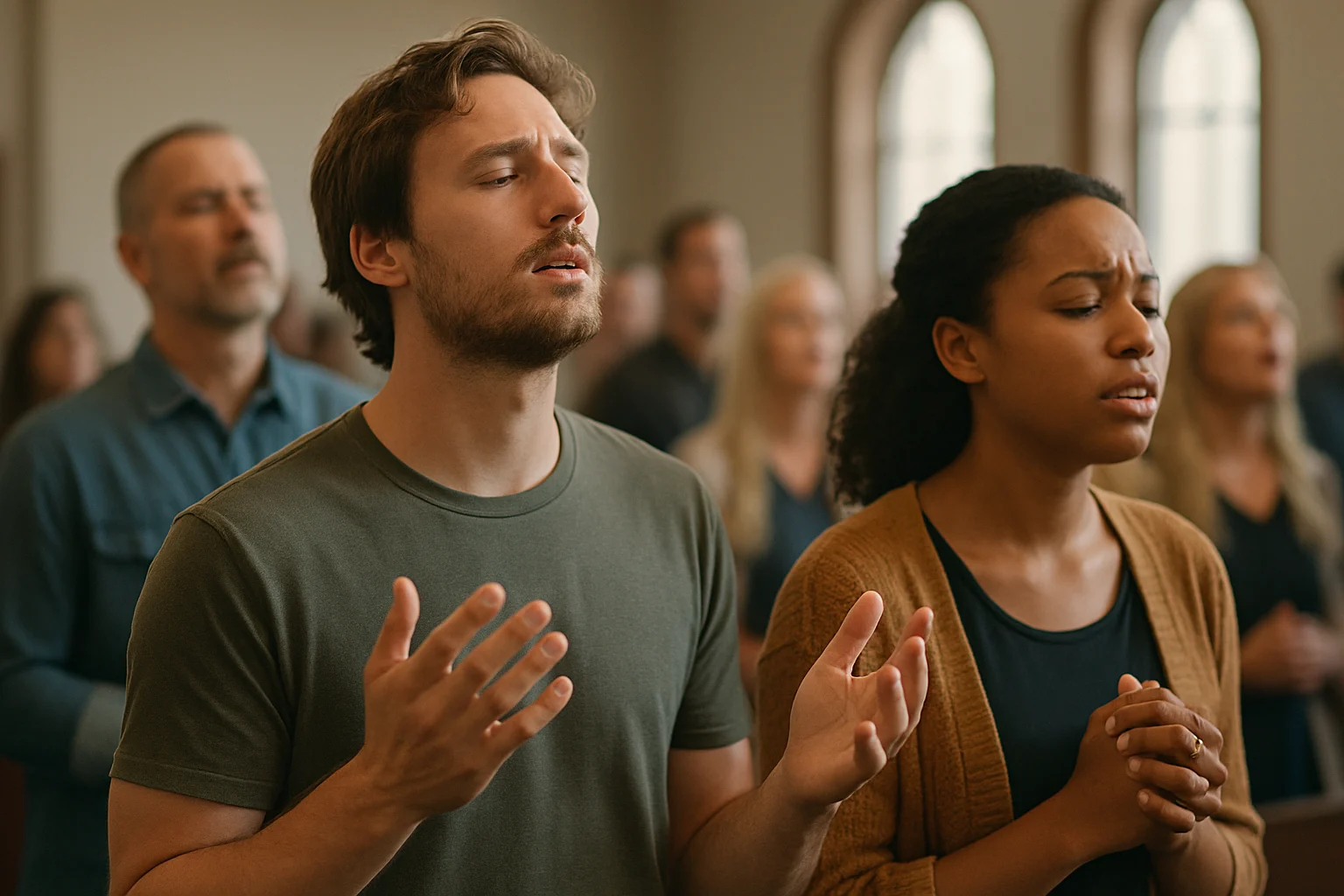
Now she goes up to the altar and prays. She pours out her heart. She prays from her deep inner self. Intensely to God, you must hear me now. I can’t take it anymore, you must hear me now. And what she was here, she was honest before God. No pretenses of any kind, but totally stripped down to the core. And she’s honest before God.

When we come before God, we must also be honest before God. Come from our deepest depths. Not try to put on a show or make it pretty or anything, because God knows our hearts anyway. So, we should just strip it all away and say it as it is. Lay it all out to Jesus, help me. I can’t take it anymore and cry with crying. Really pour out our hearts to God.

She prayed from the deepest heart. She didn’t complain, but she prayed. Maybe we should spend more time praying than complaining. I think sometimes, if we spent all the time we use complaining, praying to God, things would look different. We find it easy to complain, but we should lay it all before God and concentrate, shift our focus, because it’s so sad for me. Yes. So, I really want to and then shift to Jesus, say Jesus help me.

And even though the answer doesn’t come immediately, because she doesn’t get it just like that, and she’s been there so many times before, she keeps going, and she keeps going, and she chooses to say: “God, now you must give me this promise. I give you my child. If I get a child, I’ll give it back to you.” Imagine, I’ve fought in prayer for so many years to have a child. And then you say, God, if after 10, 15 years I get this child, I’ll give it back to you. Goodbye again. That’s quite a promise to receive or to give.

And when she’s sitting there praying with her crying, she doesn’t do it to please anyone. She comes into the temple and collapses. She doesn’t do it to make it look nice. Or for someone to see her and say, now she’s up praying again. I’ll look nice and see, I’m sitting here again.

She doesn’t care at all about anything and what’s going on around her. Her focus is God and only God. She shuts everything out. She doesn’t pray to please anyone. She doesn’t pray to be proud. She doesn’t pray to send anything out. She’s full of desperation. And God gets the attention. And nothing else.

And we must also remember that when we give to God. It’s God who should have our focus, right? Not all sorts of other things. Sometimes we can pray something, and then it’s also all sorts of other things that get our focus. But it’s God who should have our entire focus and our entire attention when we pray. She just prays so earnestly. But what she gets out of it right now, when she’s lying there praying. Yes. That Eli thinks she’s drunk because she’s just lying there for so long, and you can just see her mouth moving, but nothing.

All the others who are up praying probably look different when they pray. They probably look like I sometimes do when I’ve been down by the Wailing Wall in Israel, they stand like this. So everyone can see them, and they stand nicely. And that’s not how Hannah stood, because she’s just, I can just imagine her falling to her knees and giving everything. So she looks different than you normally do when you come in to pray, because she’s in such distress.

Eli misunderstands that. Eli goes to her and says: “Hello, you’re drunk. Pull yourself together and come back when you’re not drunk.” And she’s obviously embarrassed because she was definitely not drunk. She just had a need. We’ve also seen before in the Bible that people thought Christians were drunk when the Holy Spirit came in Acts and poured down on them. And there was such mild chaos with flames up here and people speaking in all sorts of different languages and all sorts of strange things happening in no time, and the wind blowing, and can’t you just see such chaos there, and when you come from outside and look in, what’s going on here?

Some were surprised because they could hear the gospel in their own language, but those who didn’t take the time to hear that it was actually being spoken in their own language just looked out at the assembly and said: They’re acting weird. They’re all drunk. Exactly the same as Eli does here. He doesn’t quite understand what’s going on. That’s not how you usually sit in the temple and pray. So she must be drunk.

But when Hannah now tells him: I’m not drunk, I’m in deep distress. I’m seeking God intensely. Then Eli says: Go in peace, and may what you have prayed for be fulfilled. May it happen, where it becomes a reality. And Hannah, she gets up. She doesn’t ask questions. She doesn’t say to Eli: Are you sure? How can you know? You don’t even know what I’ve prayed for. Shouldn’t we pray together, or can’t you pray for me? She asks no questions.

She stands up and says thank you. And then she leaves. She accepts it without doubt, without questions. Can it really happen? She prayed. Eli says it will happen. So it will. She leaves to join the others. She is no longer sad. If she hadn’t eaten her meat before, she certainly does now. And the next morning, she could get up and sing again. Praise God. She’s not sad anymore. She’s found peace in her heart because someone said, “May it be to you as God, as you have prayed.”

So no matter what, she trusts God and now waits for Him to intervene. The circumstances haven’t changed. It’s exactly the same as when she entered the temple. She can’t feel anything. Nothing visible has happened.

Peninnah will surely still mock her all the way home. But something has changed inside her. She’s gained a conviction that God, you’ve got this too. So it doesn’t matter what I can see or feel. All of this is completely irrelevant. Even if nothing changes, I trust you.

We can easily get stuck in what we can see. We can see some changes. And when we can’t see it, we tend to forget to focus on the promises of the Bible. But she just wanted, and couldn’t we also just learn to rest instead of always trying to find focus and find answers and find all sorts of things. We say, God, if you’ve said it like that, then that’s how it is.

I tried, it was a glimpse of this on that Wednesday. They called from Norway and said that the cells had changed, and I had just experienced being delivered and healed because I knew God had set me free. Then you get something like that, but it’s resting in God, God, I trust you completely. No matter what the circumstances say, no matter what others come and say, even if they think they’re wise. Oh, I trust you God completely. No matter what.

For me, at least, I think it required something. But for Hannah, she just had a deep trust that I will get what has been said now. So we also have to remember, she went back and worshiped God with the others before they were to travel home. And even if we also stand in problems and don’t get the answer right now, it’s also about worshiping God all the time.

For we don’t worship God for what He does, but we worship God for who He is. So even if we haven’t seen anything yet, He is still worthy of all praise, for we praise Him for who He is. And He is the King of Kings, and He is the Lord of Lords. And that deserves praise all the way through.

But Hannah, she got her promise, what she had dedicated to God about having a child. She got this son. And she named him Samuel, which means God has heard. And she just had this, God has heard my prayer. It’s no coincidence that I have a boy now.

And we’ve talked before about people who year after year after year have asked God for something. I once told about the woman with the bleeding. She had year after year after year suffered with these bleedings and hadn’t gotten anywhere and had struggled and struggled and struggled. But through the struggle she was in, she first came very low because she was worn out as a person.

She spent all her money, and she wasn’t allowed to go anywhere because of all the Jewish rules about these bleedings as a woman at that time. So she was stuck, and she wasn’t allowed to go to the temple, and she was absolutely not allowed to do anything for 12 years. But she got so low that she began to listen to what was being said about Jesus, and she came to believe in Him and said, if it’s true, then I must go to Him.

And she knew that if she went to Jesus in the crowd with all the others, it could cost her her life, because at that time, as a woman with bleeding, you weren’t allowed to go out among all the other proper Jews. So if it was discovered while she was on her way to Jesus, she would be stoned right on the spot. But she got a longing to go after God, go after Jesus, because she just knew it was the right thing.

So those 12 years had worn her down to the point where she was willing to give her life to get the real thing. Really feel it for real. For life, she knew she could be healed by Jesus.

So it must cost whatever it costs. So she went there and experienced getting what she went for. And Hannah also went year after year with a longing to get what she needed, what she longed for. And sometimes we can wonder, why does it have to take so long? But sometimes I think we have to get so low that we allow God to do something in us.

Some things need to change inside us for Him to be able to do something for me. Sometimes I think we stand in the way of God doing something in us or for us. Maybe I need to learn to have more trust. Maybe I need to shift the focus away from myself and my navel. Maybe I need to learn to allow God to touch me and do something for me. Because automatically, without fully realizing it, we can help keep God away. You can come this far. You can’t come any further in, God.

But she had no choice. And the woman with the bleeding had no choice. For after so many years, they were worn down, and they let God come all the way in. And I don’t think we want to wait 12 years or more. So let those facades fall down, and let God come in right away and say, “God, is there something in me that makes it so you can’t come in? Then show me, because I want it gone, so we can help remove these things, so God can come in and have His way.”

If Hannah had gotten her answer to prayer right away, it’s not certain she would have been willing to give Samuel to the temple. If she had just waited five years, she might have just said, great, now I’m pregnant. It wasn’t anything, it wasn’t anything special. I’m just lucky to have a child, it took a long time, and then maybe she wouldn’t have given it. Conversely, she could also have gone to the point where she said, I’ve waited so many years, so many years, so now I give up. Now I stop praying for it, because I’ve never gotten it until now, and then I’ll never get it. So I just have to live with my shame, my longing, and then God just has to bless everyone else. She could have chosen to do that too, but she didn’t.

But when you go through all these trials again and again, our trust in God grows. And that’s what makes us more trusting. And then we trust God more for the next trial we come into. And then we gain more trust, and then we can fight the battle even better next time we come into something. So it’s letting our trust in God grow again and again. And we can safely do that because God is faithful. He never lets us go, never ever.

[ENGLISH TEXT]
And it actually says that in many places in the Bible. There are several places where it says He will never leave you nor forsake you. For example, in Deuteronomy 31:8: Do not be afraid, for the Lord will go before you. He will not fail you or forsake you. So remember that, no matter where we stand. He will never leave us nor forsake us.

But Hannah, she fully trusted God, and she trusted what Eli said, and her husband was heard. Because she experienced this long struggle, she chose to give her son to God, to the temple. And the cool thing here is that her husband also supports her. When she stands with this son, he says in verse 23: “Do what you think is best,” he says. “Stay here and take care of the boy, and may the Lord help you keep your promise.” So Hannah stays home and takes care of the child. Elkanah actually blesses her in giving the boy away.

He must have also thought, well, let her just get pregnant, because he loved her so much. He saw the pain she was in and realized he couldn’t fulfill all her needs. So he must have set aside a bit and said, okay, now she got this son, but he supported her in her promise, in the decision she made before God.

And I think that’s an important thing for us too, those of us who have spouses, that we support each other in what the other experiences they need to do for God. Because you can easily say: “Oh, do you really think you should do that again?” That’s how I felt a bit back when Andreas, he was a bit too much a few years ago when he suddenly thought God should be in everything. And I thought it was way too much. What was God supposed to do in everything? Couldn’t He just be in some things? But no, He had to be in everything, and he had to go out on the street so many times, and he had to pray for so many knees.

And I got, and I think I kind of forgot to just come up. I don’t just think, I know. But when you grow in it yourself, seeing how important it is to help each other say, okay, go ahead. It’s just fine. When I was asked to come out and speak last Saturday, Andreas didn’t say to me, oh, do you think you have time for that? Don’t you think you should stay home? No. He said, fine, fine. Just use the whole day. Just go. Fine. Goodbye.

It might also be because he enjoys being a bit alone now. That could be. But he definitely supported me, and I think that’s an important part, and Elkanah did the same. He supported her in, okay, you’ve made a promise or chosen to give your child, may God make you strong enough to hand him over. That’s just fine. And I think that in itself is something we can get better at.

But anyway, she rejoiced over her gift. But she also rejoiced over her giver. And imagine what it led to, that in all her struggle over the years, she came to the point where she said, give me a child, and you’ll get him back. And she was obedient to do it. It actually led to Samuel growing up in the temple, and Samuel learning to recognize God’s voice.

You know, where he was awakened at night, and he thought it was Eli calling him, and he ran in. Eli, Eli, you called me. No, no, no. After he had been to Eli for the third time, Eli said, just listen. And next time someone says Samuel, Samuel. Then you say: “Yes, God, I’m listening.” And then it was God speaking to him.

He became very prophetic. He became a judge over Israel. He established schools of prophets, so others could also be trained to become prophets. He anointed David as king. And from David’s lineage, we got Jesus. If Hannah hadn’t come to the point where she gave her son to the temple, we would never have had a King David, from whom Jesus didn’t come.

So Hannah’s struggle led to something she couldn’t foresee herself. Her longing was fulfilled first. She got a son and more children afterward. But her prayers led much further. And I think we should also think about that sometimes. God, may what I do here have far-reaching consequences for many others in a good way. God, may I be allowed to help open doors and do things.

And we don’t always get to see it. I don’t know how much she experienced of this, right? At least not all the way down. But the fact that we pray and that we act can have consequences not just for us, but for generations.

It’s amazing to think about. It also gives a reason to be obedient when God calls. I say, God, I don’t understand this, but now I’m doing it. And I think for Hannah, it must have been a bit difficult to hand over Samuel, even though she had promised it, so she could come up every year with a new set of clothes for him, because then she could just see him again. She went to God with her worries back then.

Do we do that? So you sit here, a worry-free bunch. There’s no one here who ever has worries. And that’s nice. Hallelujah. Yes, there was one over here. There was one. But that’s what we need to remember again. It says: Cast all your worries on God. And when we do that, we shouldn’t first cast them over and then take them back with us when we leave. We should leave them there.

So no matter what kind of worries they are, whether it’s because of children, parents, remember that. Whether it’s because of a spouse, or because of finances or job or health, or it can be, the list can be long. But precisely when we cast our worries on God, we must remember to leave them there. Just like Hannah, she went up and cast it over to God, He should have it. And when Eli said, you will get what you asked for, she was no longer worried.

We have the promise in the Bible that He cares for us, and He takes our worries when we give them over to Him. So remember to leave them over with Him when we cast them there. So that we must remember, we must resist the devil, and we must move mountains. It’s not God who should resist the devil. And it’s not God who should move mountains. It’s us.

It says that if we had faith as a mustard seed, it’s not much, then we should move mountains. And we shouldn’t ask God if He will do it, because He shouldn’t. It’s us who should do it. It’s a task that might not be straightforward, but we must do it. We must go out and move mountains. But just as long as we have faith like a mustard seed.

So we must go out and transform all of Denmark. So it all starts with Hannah’s shame. So she lays it over to God. Then she trusts God. And because of her trust, she lifts her voice in praise again. Praises God, exalts Him. She gets this son, and she gives him over to God.

Faith is not wasted. Trials are not wasted. Tears are not wasted. When we give it all to God, there’s a purpose in it. And Hannah, she received more than she asked for. And we do too, when we hand things over to God. Because God gives abundantly, both what we ask for and so much more that we can’t even imagine.

So, let’s hand everything over to God, and let Hannah be our example when we pray here. Just as she paved the way into a future she couldn’t see, let’s also pray and say, God, I want to be part of your puzzle, paving the way into the future for what you know needs to happen. And then let’s praise God together for who he is. Not just for what he does. That’s amazing too, but for who he is. Yes. Amen.

Close